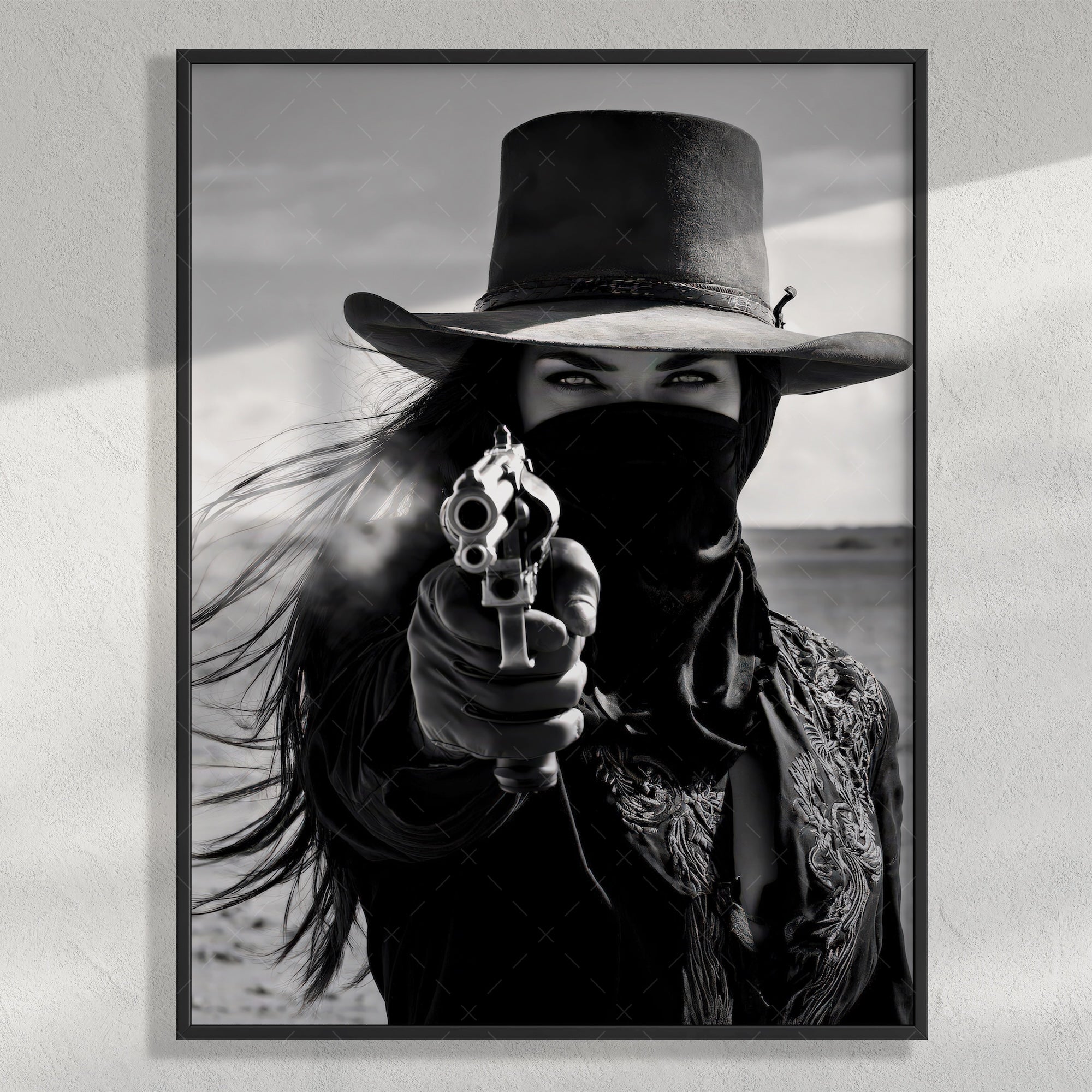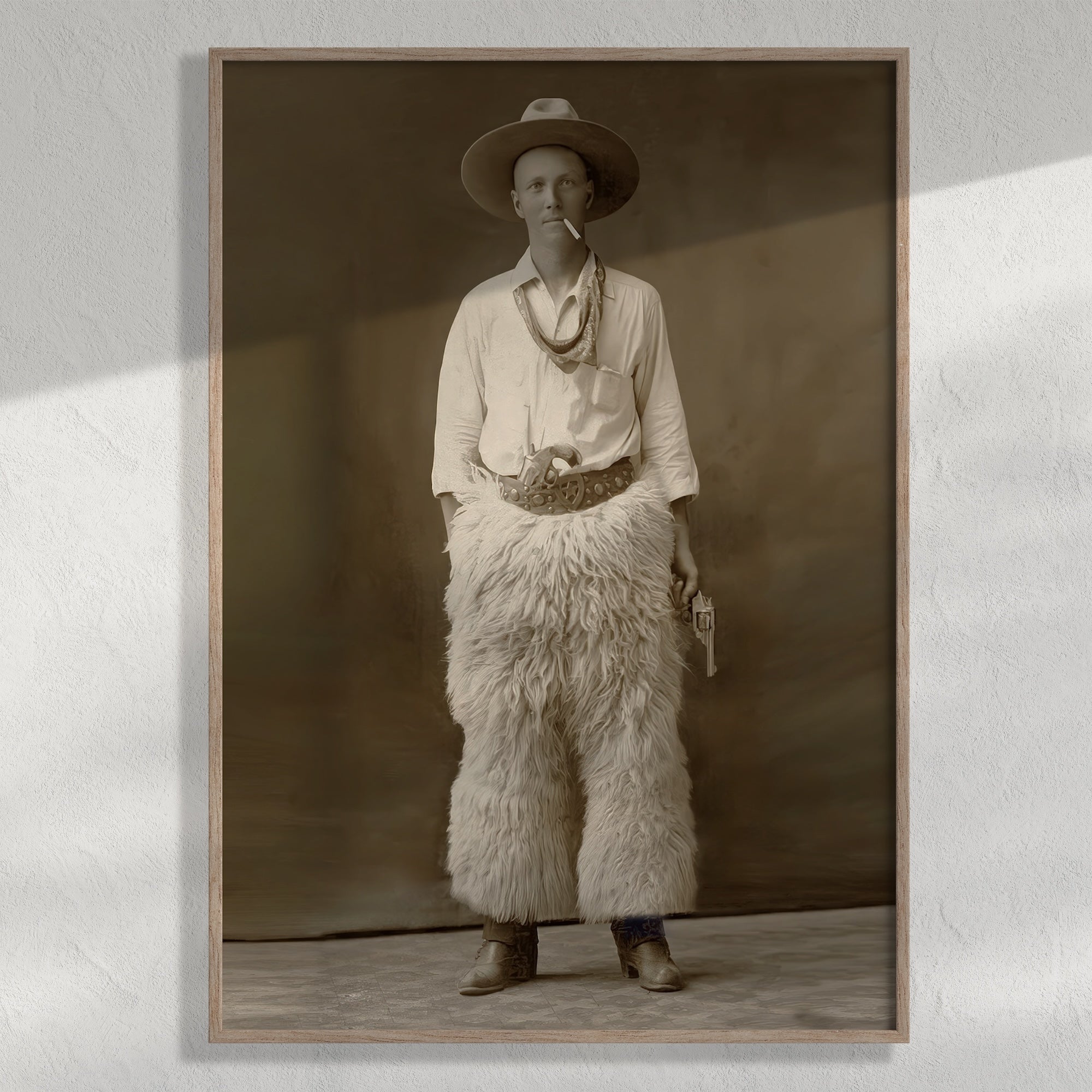


Black Cowboys & Lawmen in the Old West: 3 Books Worth Reading (Book Notes)
Most books in this curated list are available from online bookstores or via your preferred bookseller.
Black Gun, Silver Star: The Life and Legend of Frontier Marshal Bass Reeves
Black Gun, Silver Star by Art T. Burton is a detailed biography of Bass Reeves, one of the most formidable and accomplished lawmen of the American frontier. Written by historian Art T. Burton, the book seeks both to reconstruct Reeves’s extraordinary life and to correct the historical neglect that long obscured his contributions.
Born into slavery in Arkansas around 1838, Bass Reeves spent his early life owned by a Texas planter. During the Civil War, Reeves escaped bondage - possibly after a violent altercation with his enslaver - and fled into Indian Territory (present-day Oklahoma). There, he lived among Native American tribes, including the Cherokee and Seminole, learning their languages, survival skills, and the geography of the territory. This period proved crucial in shaping the tracker, linguist, and lawman he would later become.
After the war and the abolition of slavery, Reeves returned to Arkansas, married, and became a farmer. His deep knowledge of Indian Territory and reputation for integrity eventually drew the attention of Judge Isaac C. Parker, the famed “Hanging Judge” of Fort Smith. In 1875, Reeves was appointed a Deputy U.S. Marshal, one of the first Black men west of the Mississippi to hold such a position.
Over the next three decades, Reeves worked primarily in the notoriously dangerous Indian Territory, serving thousands of warrants and arresting some of the most violent criminals of the era. Burton recounts numerous episodes that highlight Reeves’s intelligence, courage, and ingenuity - especially his frequent use of disguises and deception to capture fugitives without bloodshed. Reeves was reputed to have arrested over 3,000 criminals and to have killed at least 14 men, all reportedly in self-defense.
The book does not shy away from tragedy. Reeves’s personal life was marked by hardship, including the arrest and conviction of his own son, Bennie Reeves, for murder. Bass Reeves carried out the arrest himself, demonstrating his unwavering commitment to the law even at devastating personal cost.
In his later years, Reeves served as a police officer in Muskogee, Oklahoma, after Oklahoma achieved statehood and federal marshals were phased out. He died in 1910, largely forgotten by mainstream history. Burton concludes by examining Reeves’s legacy, addressing myths and legends- including claims that Reeves inspired the Lone Ranger - and arguing persuasively for his recognition as one of the greatest lawmen in American history.
BOOK NOTES:
Black Gun, Silver Star is both a compelling biography and an important corrective to the traditional narratives of the Old West. Art T. Burton writes with a clear sense of purpose: to restore Bass Reeves to his rightful place in frontier history. The book succeeds admirably in this mission.
- One of the book’s greatest strengths is its balance between scholarly research and storytelling. Burton relies on court records, marshal reports, newspaper accounts, and oral histories, yet presents the material in an engaging, accessible style. Reeves emerges not as a mythic gunslinger, but as a disciplined, principled lawman whose success was rooted in intelligence, patience, and moral resolve.
- Burton also excels in contextualizing Reeves’s life within the racial realities of the 19th century. The book underscores the extraordinary nature of a Black man wielding federal authority over white, Native, and Black fugitives alike in a deeply racist society. Without becoming polemical, Burton makes clear how Reeves’s career defied the assumptions and limitations imposed by his era.
- At times, the narrative must rely on inference due to gaps in the historical record - an unavoidable challenge when documenting the lives of marginalized figures. Burton is generally careful to distinguish between documented fact and plausible reconstruction, though readers seeking exhaustive documentation may occasionally wish for deeper sourcing within the text itself.
SUMMARY: Black Gun, Silver Star is an essential work for readers interested in Western history, Black American history, and law enforcement on the frontier. It is both informative and inspiring, presenting Bass Reeves as a figure of remarkable courage and integrity whose story enriches - and complicates - our understanding of the American West.
Black Cowboys in the American West: On the Range, On the Stage, Behind the Badge
Black Cowboys in the American West is a collection of scholarly essays and historical accounts that reconstructs the rich, multifaceted contributions of Black cowboys and cowgirls from before the Civil War through the early twentieth century. Edited by Bruce A. Glasrud and Michael N. Searles, it is the first major comprehensive overview of its kind in more than fifty years, filling long-neglected gaps in the history of the American West.
The volume is organized into three thematic sections:
Cowboys on the Range -This section traces the roots and everyday lives of Black cowhands, showing how many were trained in livestock work even before emancipation, when enslaved Africans and their descendants tended cattle, broke horses, and learned skills that became central to ranching life. Essays here profile figures like Mathew “Bones” Hooks, Daniel Webster “80 John” Wallace, and Nat Love (Deadwood Dick), demonstrating that Black cowboys were not exceptions but essential participants in long cattle drives, ranch work, and frontier settlement. It also highlights Black women cowhands and Black Seminole vaqueros, who played roles often overlooked in cowboy lore.
Performing Cowboys - Beyond ranch work, African Americans shaped cowboy culture through rodeo performance, music, and popular entertainment. This section explores Black rodeo circuits in places like Texas and Oklahoma, and celebrates performers such as Herb Jeffries, a singer and actor who embraced cowboy imagery in film and music. It also chronicles the musical traditions of Black cowhands, whose songs and storytelling enriched Western folklore.
Outriders of the Black Cowboys - The final section profiles exceptional individuals who expanded the cowboy role into new arenas. This includes Mary Fields, a legendary mail carrier; Charley Willis, a cowboy and singer; and Bass Reeves, a renowned lawman who brought frontier justice to Indian Territory. These stories emphasize the breadth of African American influence in frontier society, from law enforcement to community leadership.
Across its thirteen chapters, the book shows that approximately 5,000 Black cowboys worked in the West during the late nineteenth century, helping to develop ranching communities, settle frontier towns, and shape Western identity. It also documents how these men and women lived hard, dangerous lives amid discrimination - but also found autonomy and opportunity out West that was often denied back East or in the South.
Key Figures and Brief Biographies:
Nat Love (1854–1921) - Also known as Deadwood Dick, Nat Love was a formerly enslaved man who became a highly skilled cowboy on the Western cattle trails. He gained fame after winning a Deadwood rodeo contest and later wrote an autobiography recounting his adventures. Love’s life illustrates both the freedom and danger of cowboy work and the self-mythologizing common to frontier narratives.
Bass Reeves (1838–1910) - One of the most famous Black lawmen of the Old West, Reeves served as a U.S. Deputy Marshal in Indian Territory. He arrested thousands of criminals over a long career and was known for his intelligence, marksmanship, and integrity. His story challenges stereotypes about both cowboys and frontier law enforcement.
Bill Pickett (1870–1932) - A pioneering rodeo performer, Pickett is credited with inventing bulldogging, now known as steer wrestling. Despite widespread popularity, he was often barred from competing against white cowboys. Pickett’s career exemplifies how Black cowboys shaped Western sports while facing racial exclusion.
Bose Ikard (1843–1929) - A trusted trail hand on the Goodnight–Loving Trail, Ikard worked closely with rancher Charles Goodnight. Known for his reliability and courage, Ikard earned rare public praise from Goodnight, who acknowledged him as indispensable. His life highlights the essential labor of Black cowboys on major cattle drives.
Mary Fields (“Stagecoach Mary,” c. 1832–1914) - Though not a traditional cowboy, Mary Fields worked as a mail carrier and laborer in Montana, often performing physically demanding frontier work associated with men. Her inclusion broadens the definition of Western labor and underscores the presence of Black women in frontier life.
Daniel Webster “80 John” Wallace (1860–1929) - Wallace was a respected cowboy and ranch hand whose nickname came from his association with the famed XIT Ranch. His life reflects the everyday experiences of Black cowboys whose contributions were crucial but rarely documented in popular histories.
Mathew “Bones” Hooks (1860s–1900s) - Hooks was a celebrated rodeo performer and trick rider known for his athleticism and showmanship. He later became a mentor to younger Black cowboys. His story bridges working cowboy life and public performance.
Charley Willis (1847–1907) - A cowboy and trail singer, Willis worked on cattle drives and is remembered for helping preserve cowboy music and folklore. His life demonstrates the cultural as well as economic contributions Black cowboys made to Western traditions.
Herb Jeffries (1913–2014) - A singer, actor, and rodeo enthusiast, Jeffries became known as the “Bronze Buckaroo” for starring in all-Black Western films during the 1930s. Though later than the traditional Old West era, his career shows how Black cowboy imagery continued into popular culture and entertainment.
Black Seminole Cowboys - Rather than a single individual, the book discusses Black Seminole vaqueros who combined African, Native American, and Spanish ranching traditions. Their horsemanship and cattle skills influenced cowboy practices in Texas and northern Mexico.
BOOK NOTES:
- This volume stands out for its scope and ambition, bringing together classic research and new scholarship to present a fuller picture of Black cowboy life on the range, in rodeos, in music and film, and beyond. It expands the narrative well beyond cattle drives to explore how African Americans helped shape Western culture in many arenas.
- The book effectively challenges the myth of the cowboy as exclusively white—a stereotype popularized by films and literature—and instead shows that Black men and women rode, worked, performed, and lived as cowhands across the West. This recalibration aligns with research suggesting that as many as one in four cowboys were Black in some regions of the late 19th-century frontier.
- By dividing the work into sections on daily labor, performance, and exceptional figures, the editors give readers a three-dimensional view of Black cowboy life. The inclusion of Black women and performers broadens understanding of roles often omitted in cowboy histories.
- While grounded in academic research, the anthology remains accessible to general readers interested in American history, African American studies, and the cultural evolution of the West. Essays are engaging and often grounded in primary sources and vivid individual stories.
SUMMARY: Black Cowboys in the American West: On the Range, On the Stage, Behind the Badge is a crucial and long-overdue contribution to Western history. It broadens and deepens understanding of the American cowboy by centering African American experiences that have too often been marginalized or erased. The anthology’s combination of range work, performance history, and notable personal stories makes it both informative and inspiring. For anyone interested in cowboy culture, Black American history, or the real diversity of the American West, this book offers essential insights and a richer, more inclusive narrative than traditional Western histories.
Black Cowboys of the Old West: True, Sensational, and Little-Known Stories From History
Black Cowboys of the Old West by Tricia Martineau Wagner is a nonfiction history book that brings to life the overlooked and under-represented stories of Black Americans who worked as cowboys, wranglers, and rodeo performers in the American West after the Civil War. The book opens by challenging the stereotypical Hollywood image of cowboys as exclusively white gunmen and riders—an image that has dominated popular culture despite historical evidence that Black men made up a significant portion of Western cattle workers and rodeo stars.
Following emancipation, many formerly enslaved Black men left the South to seek new lives on the open plains, bringing with them skills learned under bondage and a fierce desire for independence. Some found work on cattle drives, ranches, and range lands in states like Texas, Kansas, and Montana; others became trailblazers in early rodeos and livestock handling.
Rather than offering one continuous narrative, the book presents a series of biographical sketches and episodic accounts of real historical figures. These include:
- Reno-era cattle hands
- Famous rodeo performers such as Bill Pickett - credited with inventing “bulldogging,” a form of steer wrestling
- Lesser-known ranch workers and trail riders
- Individuals whose lives illuminate the diversity and complexity of frontier experience
Each chapter focuses on a different cowboy’s life, their personal accomplishments, and the social and economic challenges they faced in a post-Civil War America still marked by racism and inequality. While the stories vary in tone and detail, together they paint a richer, more inclusive picture of the Old West than most standard histories offer.
Specific cowboys featured in Black Cowboys of the Old West:
Jesse Stahl - The book’s first profile, Stahl’s story highlights his life as a ranch hand and cowboy who worked the range after the Civil War, exemplifying the thousands of Black men who helped drive cattle and shape Western ranch life.
Isom Dart - A former cowboy who later became a rancher, horse trainer, and (controversially) an outlaw and marksman in the New Mexico and Wyoming territories. His life shows the blurred lines between legal and illegal work on the frontier.
Bose Ikard - One of the most respected trail hands of the era, Ikard worked on major cattle drives, particularly on the Goodnight–Loving Trail, and became a trusted aide and friend to rancher Charles Goodnight.
Nat Love - Also known by the nicknames Deadwood Dick and Red River Dick, Love was a famed cowboy and rodeo performer whose own memoirs recount adventurous and sometimes larger-than-life episodes on the trail.
Robert Lemmons - Known as the “horse whisperer,” Lemmons gained renown for his skill with horses - breaking, training, and handling them- which made him invaluable on ranches and cattle drives.
Bill Pickett - A legendary rodeo figure credited with inventing bulldogging (steer wrestling), Pickett’s daring performances brought him fame in Wild West shows, though racial barriers limited his recognition in some mainstream events.
Jim Perry - A top hand at the XIT Ranch, one of the largest ranches in Texas, Perry distinguished himself as a hardworking and skilled cowboy on the demanding and extensive ranch operations.
Charley Willis - Featured for his toughness and cowboy skill, Willis worked on the range and became known for his contributions to the daily work of driving and managing cattle.
Daniel Webster Wallace - His story reflects dedication and a strong work ethic in frontier ranch life, showing how Black cowboys often endured grueling conditions with quiet resolve.
George McJunkin - A former cowboy and self-educated amateur archaeologist, McJunkin made an important archaeological discovery (the Folsom site) that transformed understanding of early human habitation in North America.
BOOK NOTES:
- The book succeeds in filling a significant gap in traditional Western lore by spotlighting Black cowboys who have long been marginalized or erased from mainstream accounts.
- The writing is approachable for general audiences, making it a good introduction for those unfamiliar with this chapter of American history.
SUMMARY: Black Cowboys of the Old West is a valuable and eye-opening read for anyone wanting an accessible entry point to the real history behind the mythic cowboy image. Its collection of true stories highlights overlooked figures whose contributions quietly reshaped American frontier culture.