
Real Life & Fictional Horses: 5 Books Worth Reading (Book Notes)
**Book notes may contain spoilers**
Seabiscuit: An American Legend
Seabiscuit: An American Legend by Laura Hillenbrand tells the true story of an unlikely racehorse who became a national hero during the Great Depression. More than a sports biography, the book weaves together the lives of three damaged, overlooked men and one undersized, underestimated horse whose shared resilience captured the American imagination.
Seabiscuit was born in 1933, descended from the great racehorse Man o’ War, but he seemed to inherit little of his famous father’s brilliance. As a young horse, Seabiscuit was overworked, poorly trained, and repeatedly written off as lazy and unremarkable. He lost far more races than he won and was eventually sold cheaply - an ignominious fate for a horse with such a pedigree.
Charles Howard, the owner, was a self-made millionaire who built his fortune selling automobiles in California. His life, however, was marked by personal tragedy, including the death of his son and the collapse of his marriage. Howard’s wealth could not shield him from grief, and his attraction to Seabiscuit stemmed in part from recognizing a wounded spirit in the horse - one that mirrored his own losses.
Tom Smith, known as “Silent Tom,” was an unconventional and intuitive horse trainer. He believed in understanding a horse’s psychology rather than forcing compliance. Smith recognized that Seabiscuit’s apparent laziness was actually exhaustion and mistrust caused by years of mistreatment. Through patience, rest, and unorthodox training methods, Smith helped the horse regain confidence and strength.
Red Pollard, Seabiscuit’s jockey, had endured a harsh upbringing marked by poverty and abandonment. Like Seabiscuit, Pollard was physically battered and frequently dismissed as unfit for success. Despite injuries and setbacks - including devastating accidents that nearly ended his career - Pollard formed a deep bond with the horse, based on mutual understanding and toughness.
Against all expectations, Seabiscuit began winning races, often against faster, better-bred horses. His gritty, come-from-behind racing style thrilled spectators. During the depths of the Great Depression, Americans saw in Seabiscuit a reflection of their own struggles - a small, battered figure refusing to give up.
The book culminates in Seabiscuit’s legendary 1938 match race against War Admiral, the reigning Triple Crown champion. In a dramatic upset, Seabiscuit defeated War Admiral, cementing his place in racing history and national folklore. Hillenbrand does not end the story with victory alone. She follows Seabiscuit through injuries, comebacks, and eventual retirement, emphasizing endurance over glory. The story concludes with a sense of hard-earned peace rather than simple triumph.
At its core, Seabiscuit is a story about resilience, redemption, and empathy. Hillenbrand frames the horse not as a symbol imposed upon by humans, but as an active participant with personality, intelligence, and agency. The parallel hardships faced by Seabiscuit, Howard, Smith, and Pollard reinforce the book’s central message: greatness often emerges from suffering and perseverance rather than privilege.
The book also functions as a social history of Depression-era America. Hillenbrand vividly captures the desperation, hope, and communal spirit of the time, explaining why Seabiscuit’s victories meant so much to ordinary people.
Hillenbrand’s prose is accessible yet richly detailed. She blends narrative storytelling with meticulous research, making complex racing terminology understandable without oversimplifying the sport. Her pacing is particularly effective - quiet, reflective passages are balanced with high-stakes race descriptions that read with the tension of fiction.
SUMMARY: Seabiscuit: An American Legend succeeds because it transcends its subject. It is not merely about horse racing, but about the human capacity to recognize worth where others see failure. Hillenbrand’s work stands as a powerful example of narrative nonfiction -informative, moving, and enduring. Recommended for readers interested in history, sports, biography, and inspirational true stories.
America’s Wild Horses: The History of the Western Mustang
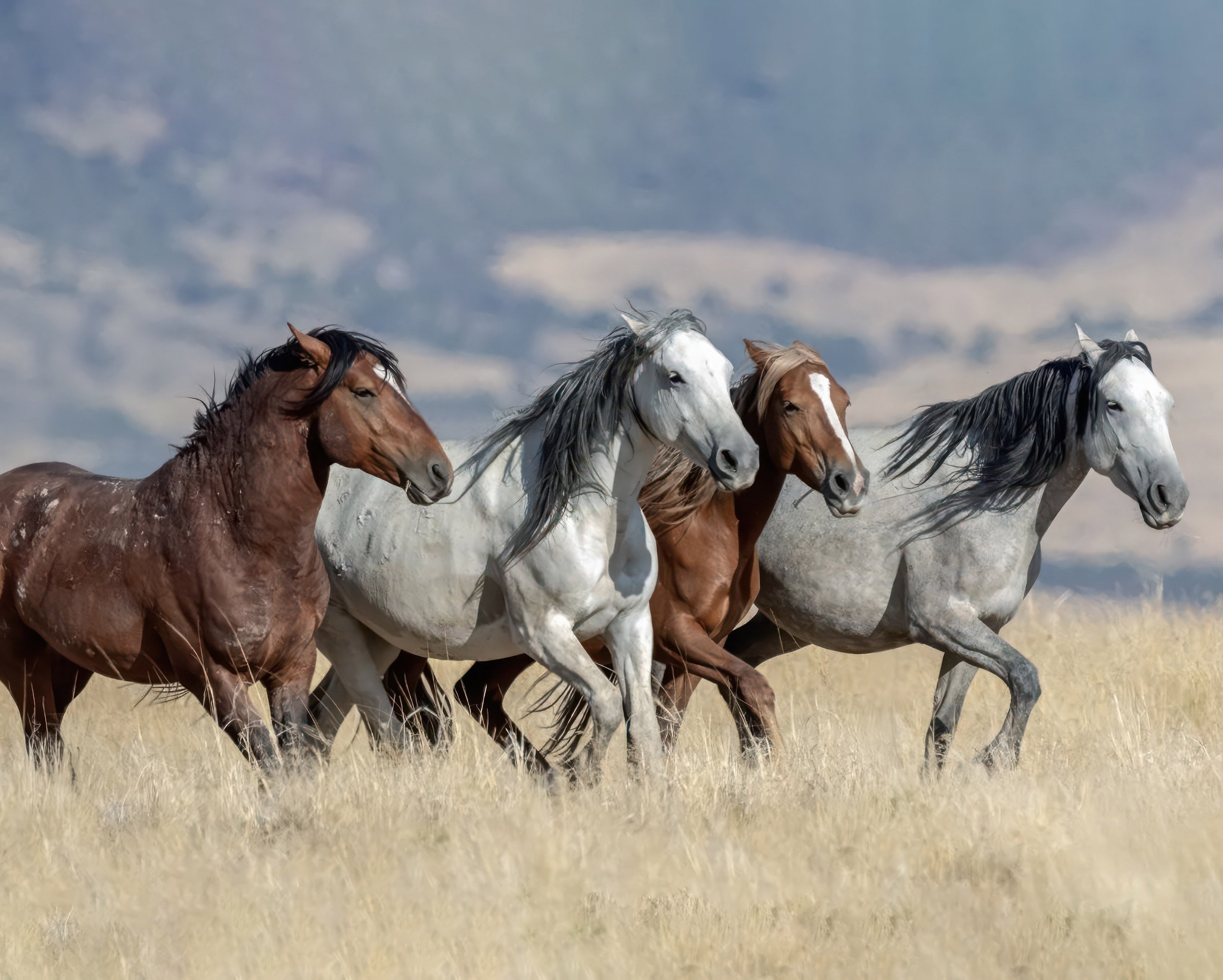
America’s Wild Horses: The History of the Western Mustang by Steve Price is a cultural and historical account of the mustang - the free-roaming horse that has become a quintessential symbol of the American West. Price approaches the subject as both a lifelong horse lover and award-winning photographer, blending meticulous research, firsthand interviews, and evocative photography to bring the story of these animals to life.
The book begins by situating the horse within the broader sweep of natural history, including the prehistoric evolution of equines in North America. Price then explains how horses - once native to the continent but extinct by the end of the Ice Age - returned with European explorers. Spanish conquistadors and settlers reintroduced horses in the 16th century, and many escaped or were abandoned, eventually forming the feral populations that came to be known as mustangs.
Price traces how Spanish breeders in the Southwest influenced the development of horse stock, including Spanish Mustangs with distinctive physical and genetic traits. These animals adapted to rugged landscapes and harsh conditions, developing resilience that became legendary.
A central focus of the book is how the arrival of horses transformed Indigenous cultures. Tribes across the Plains and Southwest integrated horses into their daily lives, fundamentally reshaping hunting, warfare, trade, mobility, and cultural practices. Price emphasizes the deeply symbolic as well as practical importance of horses to Native societies, noting how certain tribes valued specific colors and traits in their mounts.
As European settlement expanded, mustangs became woven into the mythology and reality of the American frontier. They were featured in cattle drives, used by cowboys, and became emblematic of freedom and rugged individualism — often romanticized in art, literature, and early Western films. Price discusses how mustangs shaped the cultural identity of the West and became icons of the frontier spirit.
In the later chapters, Price examines the modern history of mustangs, especially their legal and ecological battles. With growing ranching and federal land policies in the 20th century, mustang populations were increasingly seen as nuisances competing with livestock for grazing. Efforts to protect them culminated in the Wild Free-Roaming Horses and Burros Act of 1971, a key legal milestone championed by activists. Price explains how scientific advances, legislative efforts, sanctuary programs, and conservation initiatives continue to shape the mustang’s future.
Throughout the book, Price intersperses dozens of stunning photographs and interviews with horse experts, ranchers, historians, and advocates. These personal stories and visual narratives enhance the historical overview, giving readers a vivid sense of the lives of wild horses and the people who care about them.
BOOK NOTES:
- Price’s work stands out for its breadth and accessibility. By beginning with prehistoric equines and progressing through centuries of human-horse interactions, he provides readers with a full cultural arc that ties biology, anthropology, and national identity together.
- The photography in the book is a major asset. Price’s images of mustangs in rugged landscapes, alongside historical sites and ranching scenes give texture and emotional resonance beyond text alone.
- While the subject matter could easily become dry, Price’s poignant prose and use of firsthand interviews make the narrative engaging even for readers without prior knowledge of equines or Western history.
- Recommended for lovers of horses and Western culture, readers interested in American history and mythmaking, and those who appreciate high-quality photography paired with narrative nonfiction.
SUMMARY: America’s Wild Horses succeeds in both educating and inspiring, giving readers a heartfelt and visually rich journey through the history of the Western mustang, from prehistoric ancestors to modern conservation. It balances storytelling, history, and imagery to celebrate one of America’s most enduring symbols.
Secretariat: The Making of a Champion
Secretariat: The Making of a Champion, written by William Nack chronicles the life, career, and cultural impact of Secretariat, the legendary Thoroughbred racehorse whose 1973 Triple Crown victory redefined excellence in American horse racing. Nack combines meticulous research with vivid storytelling to present not only Secretariat’s racing achievements but also the people, circumstances, and spirit that shaped him.
The book begins with Secretariat’s breeding, emphasizing the importance of bloodlines in Thoroughbred racing. Secretariat was foaled in 1970 at Meadow Farm in Virginia and was sired by Bold Ruler out of Somethingroyal. Nack explains how the mating initially seemed risky—Bold Ruler’s offspring were often brilliant but fragile - but Somethingroyal’s durability and temperament proved crucial.
Secretariat’s owner, Penny Chenery, emerges early as a central figure. When she takes over Meadow Farm from her ailing father, she enters a male-dominated industry with little formal experience but extraordinary determination. Her decision to keep the colt rather than sell him becomes one of the most consequential choices in racing history.
Secretariat’s early training under Lucien Laurin reveals both promise and frustration. As a young horse, Secretariat shows flashes of brilliance but often finishes second, earning him the nickname “Big Red” and a reputation as talented but inconsistent. Laurin’s patient training philosophy—allowing Secretariat to mature physically and mentally—plays a key role in his eventual success.
Jockey Ron Turcotte is introduced as Secretariat’s ideal rider, whose calm demeanor and intuitive understanding of the horse create a powerful partnership. Nack highlights the subtle adjustments Turcotte makes in riding style, allowing Secretariat to run freely rather than restraining his natural power.
Secretariat’s three-year-old season marks a dramatic transformation. He dominates the 1973 Triple Crown, winning the Kentucky Derby, Preakness Stakes, and Belmont Stakes in record-breaking fashion.
- In the Kentucky Derby, Secretariat runs each quarter-mile faster than the last—an unprecedented feat.
- In the Preakness, he overcomes controversy surrounding timing discrepancies but wins decisively.
- In the Belmont Stakes, Secretariat delivers one of the most astonishing performances in sports history, winning by 31 lengths and setting a world record time of 2:24 for 1½ miles - a record that still stands.
Nack devotes significant attention to the Belmont, portraying it as a near-mythic event that transcended horse racing and captured the national imagination.
The book continues beyond Secretariat’s most famous victories, examining later races such as the Marlboro Cup and the Man o’ War Stakes, where he defeats older, elite competition. These races confirm that Secretariat’s greatness extended well beyond the Triple Crown.
Nack also explores Secretariat’s physical attributes—his massive heart, efficient stride, and extraordinary lung capacity—while carefully separating myth from verified fact.
The final sections of the book reflect on Secretariat’s retirement to stud and his enduring legacy. Although his stud career did not produce a successor equal to his own racing brilliance, Secretariat left a lasting imprint on breeding, racing culture, and public memory.
Nack situates Secretariat within the broader context of American history, arguing that his rise during a turbulent era offered the nation a symbol of excellence, grace, and hope.
BOOK NOTES:
- At its core, the book is about greatness - how it is formed, recognized, and remembered. Nack emphasizes that Secretariat’s success was not inevitable; it resulted from the convergence of breeding, training, trust, and human intuition. Another key theme is perseverance, particularly through Penny Chenery, whose leadership challenged gender norms and reshaped the racing world. Her faith in Secretariat mirrors the broader belief that greatness often requires patience and courage.
- William Nack’s prose is elegant, lyrical, and deeply informed. As a longtime racing journalist, he balances technical knowledge with emotional storytelling. The book appeals both to seasoned racing fans and to general readers unfamiliar with the sport.
- Nack’s attention to detail - race strategies, track conditions, and training decisions - adds authenticity without overwhelming the narrative.
- The book evokes awe rather than sentimentality. Secretariat’s performances are described with a sense of reverence, particularly during the Belmont Stakes, which reads like a historical epic. The emotional weight comes from witnessing perfection achieved under pressure.
SUMMARY: Secretariat: The Making of a Champion is widely regarded as the definitive biography of America’s greatest racehorse. William Nack succeeds in capturing not only Secretariat’s athletic brilliance but also the human relationships and historical moment that elevated him to legend.
War Horse
War Horse is a historical novel written by Michael Morpurgo. The story is set primarily during World War I and is uniquely told from the first-person perspective of a horse, Joey. Through Joey’s eyes, the novel explores the brutality of war, the bond between humans and animals, and the loss of innocence caused by conflict.
The story begins in rural Devon, England, where Joey is purchased by a poor, alcoholic farmer named Ted Narracott. Ted buys Joey impulsively at an auction, despite the objections of his wife, who worries they cannot afford a horse. Ted intends to use Joey as a farm horse, though Joey is young and untrained.
Joey soon forms a deep bond with Ted’s son, Albert, a gentle and determined boy who trains Joey with patience and kindness. Albert teaches Joey to plow fields, despite the horse’s small size and lack of experience. Over time, Joey proves his strength and loyalty, and Albert becomes his closest companion.
When World War I breaks out, Ted - desperate for money - sells Joey to the British Army. Albert is devastated and tries to enlist so he can stay with Joey, but he is too young and is sent home. Joey is taken away, believing Albert will return for him one day.
Joey is trained as a cavalry horse alongside another horse, Topthorn, a beautiful and proud thoroughbred. The two horses form a close friendship. They are assigned to Captain Nicholls, a kind and respectful officer who treats them with dignity.
Once deployed to France, Joey quickly learns that war is chaotic and terrifying. Early in the campaign, Captain Nicholls is killed during a cavalry charge against German machine guns, highlighting the tragic futility of traditional warfare in the modern age.
Joey and Topthorn are captured by the German army and put under the care of Trooper Emilie, a young girl, and her grandfather, along with a kind German soldier named Trooper Trooper (often referred to as Emilie’s protector). The horses are used to pull artillery and wagons rather than charge into battle.
For a brief time, Joey experiences peace and kindness with Emilie, but war eventually intrudes again. Emilie’s grandfather dies, Trooper Trooper is executed for desertion, and Emilie herself later dies from illness—one of the novel’s most heartbreaking moments.
As the war drags on, Topthorn becomes weak and eventually collapses and dies from exhaustion, leaving Joey alone. Joey continues to endure harsh conditions, pulling heavy artillery and witnessing widespread suffering among soldiers and animals alike.
Eventually, Joey breaks free during a battle and runs into no-man’s-land, where he becomes trapped in barbed wire. He is rescued by British soldiers—one of whom turns out to be Albert, now older and serving as a soldier. Although Joey is nearly blind and weak, Albert recognizes him through their shared bond.
After the war ends, Joey is nearly sold to a butcher due to his poor condition, but Albert intervenes. Ted Narracott appears and buys Joey back, allowing both Joey and Albert to return home to Devon. The novel ends on a hopeful note, emphasizing reunion, healing, and survival after unimaginable loss.
BOOK NOTES:
- One of the novel’s central themes is the senseless cruelty of war. By telling the story through a horse’s perspective, Morpurgo removes political justifications and focuses purely on suffering, fear, and loyalty. Joey does not understand national borders or ideologies - only kindness and cruelty. Another major theme is the bond between humans and animals. Joey’s relationship with Albert, Captain Nicholls, Trooper Trooper, and Emilie demonstrates how compassion can exist even amid violence. These relationships contrast sharply with the brutality of war. The novel also explores loss, endurance, and innocence. Joey’s innocence as a narrator emphasizes how war destroys the pure and the powerless, including children and animals.
- The first-person narration from Joey’s point of view is simple, direct, and emotionally powerful. Morpurgo avoids overly complex language, making the novel accessible to younger readers while still deeply affecting adults. The horse’s limited understanding of human politics allows readers to interpret events with emotional clarity rather than ideological bias.
- War Horse is deeply moving. Scenes such as Captain Nicholls’ death, Emilie’s fate, and Topthorn’s collapse are emotionally devastating, yet never feel manipulative. The novel balances sorrow with moments of hope and kindness, making its message both heartbreaking and uplifting.
SUMMARY: War Horse is a powerful and timeless novel that presents the horrors of war in a deeply personal way. By focusing on the experience of a horse, Michael Morpurgo creates a story that transcends age, nationality, and politics. The novel is both a compelling historical narrative and a poignant reminder of the cost of human conflict.
The Horse Whisperer
The Horse Whisperer, written by Nicholas Evans, explores trauma, healing, and emotional connection through the intertwined lives of a young girl, her horse, and the people drawn together by tragedy. Set primarily in the American West, the novel blends psychological drama, romance, and rich descriptions of ranch life.
The story opens with a devastating accident in upstate New York. Grace MacLean, a teenage girl, and her best friend are riding their horses along a snowy road when a tractor-trailer jackknifes into them. Grace’s friend and her horse are killed, and Grace survives but loses part of her lower leg. Her horse, Pilgrim, is physically injured and psychologically traumatized, becoming violent and unmanageable.
The accident leaves Grace emotionally withdrawn and angry, her mother Annie MacLean overwhelmed with guilt and fear, and Pilgrim on the brink of being put down due to his dangerous behavior.
Refusing to give up on Pilgrim - or on Grace - Annie learns of Tom Booker, a “horse whisperer” in Montana reputed to have an almost mystical ability to heal troubled horses. Against the wishes of her husband, Robert MacLean, Annie takes Grace and Pilgrim west in search of help.
Their arrival at Tom’s remote ranch marks a turning point. The vast Montana landscape, starkly different from their urban East Coast life, becomes a space for reflection and change.
Tom Booker begins working patiently with Pilgrim, using quiet observation, trust-building, and nonviolent methods. As Pilgrim slowly responds, it becomes clear that the horse’s trauma mirrors Grace’s own emotional wounds.
At the same time, Tom becomes involved in Grace’s healing, encouraging her to confront her anger and sense of loss rather than retreat from the world. Grace gradually regains confidence, strength, and a renewed sense of purpose.
Annie, too, undergoes transformation. Drawn to Tom’s grounded presence and philosophy, she begins to question her high-pressure career as a magazine editor, her marriage, and the life she has built around ambition rather than fulfillment.
A romantic relationship develops between Annie and Tom, rooted in mutual respect and emotional honesty. Their connection contrasts sharply with Annie’s strained marriage to Robert, whose absence and emotional distance have grown more pronounced.
However, the romance brings moral complexity. Annie struggles with loyalty to her family while yearning for authenticity and happiness. Grace becomes aware of the relationship and feels conflicted—both grateful for Tom’s help and fearful of losing stability.
Ultimately, Pilgrim recovers sufficiently to live and work again, symbolizing the power of patience and understanding. Grace accepts her physical limitations and embraces a new identity that includes resilience rather than bitterness.
Annie chooses to return to New York with Grace, ending her relationship with Tom. The decision reflects growth rather than defeat—she recognizes the importance of responsibility, family, and personal integrity. The novel concludes with quiet hope rather than dramatic resolution, emphasizing that healing does not erase pain but allows life to continue meaningfully.
BOOK NOTES:
- The central theme of the novel is healing after trauma. Evans draws parallels between physical injury, emotional pain, and psychological fear, showing how recovery requires time, patience, and compassion. Another major theme is connection - between humans, animals, and nature. Tom Booker’s philosophy emphasizes listening rather than control, suggesting that true understanding comes from empathy rather than force. The novel also explores identity and choice, particularly in Annie’s storyline. Her internal conflict reflects broader questions about success, fulfillment, and moral responsibility.
- The characters are richly drawn and emotionally complex. Grace’s journey from anger to acceptance is especially compelling, while Annie’s transformation feels realistic and nuanced. Tom Booker, though idealized at times, serves as a moral anchor and catalyst for change.
- Nicholas Evans’s prose is descriptive and immersive, particularly in his depiction of Montana’s landscapes and ranch life. The pacing is deliberate, allowing emotional developments to unfold naturally. While some sections are introspective and slow-moving, they reinforce the novel’s reflective tone.
- The Horse Whisperer is deeply emotional without becoming sentimental. The opening accident is shocking, and the gradual healing process feels earned rather than convenient. The novel invites readers to reflect on their own experiences with loss, love, and forgiveness.
The Horse Whisperer is a moving, introspective novel that examines how broken lives - human and animal - can be made whole through patience, trust, and understanding. Nicholas Evans crafts a story that is both emotionally resonant and philosophically reflective.