
True Crime Stories Made into Movies: 5 Books Worth Reading (Book Notes)
Book notes may contain spoilers.
Most books in this curated list are available from online bookstores or via your preferred bookseller.
Midnight in the Garden of Good and Evil
Midnight in the Garden of Good and Evil, a nonfiction book by John Berendt published in 1994, is based on the author's experiences while living in Savannah, Georgia in the early 1980s. It weaves together elements of true crime, Southern Gothic, and social commentary to create a fascinating portrait of the city and its inhabitants.
The book's central focus is on the murder trial of Jim Williams, a wealthy antiques dealer who is accused of killing his "assistant", Danny Hansford. As the trial unfolds, Berendt provides a richly detailed account of the various characters involved in the case, including Williams himself, the prosecuting attorney, and the eccentric Savannah residents who serve as witnesses.
But Midnight in the Garden of Good and Evil is more than just a true crime story. Berendt uses the trial as a lens through which to explore the culture and history of Savannah, a city steeped in tradition and legend. He introduces readers to a cast of characters who are as diverse as they are colorful, from voodoo priestesses to drag queens to socialites.
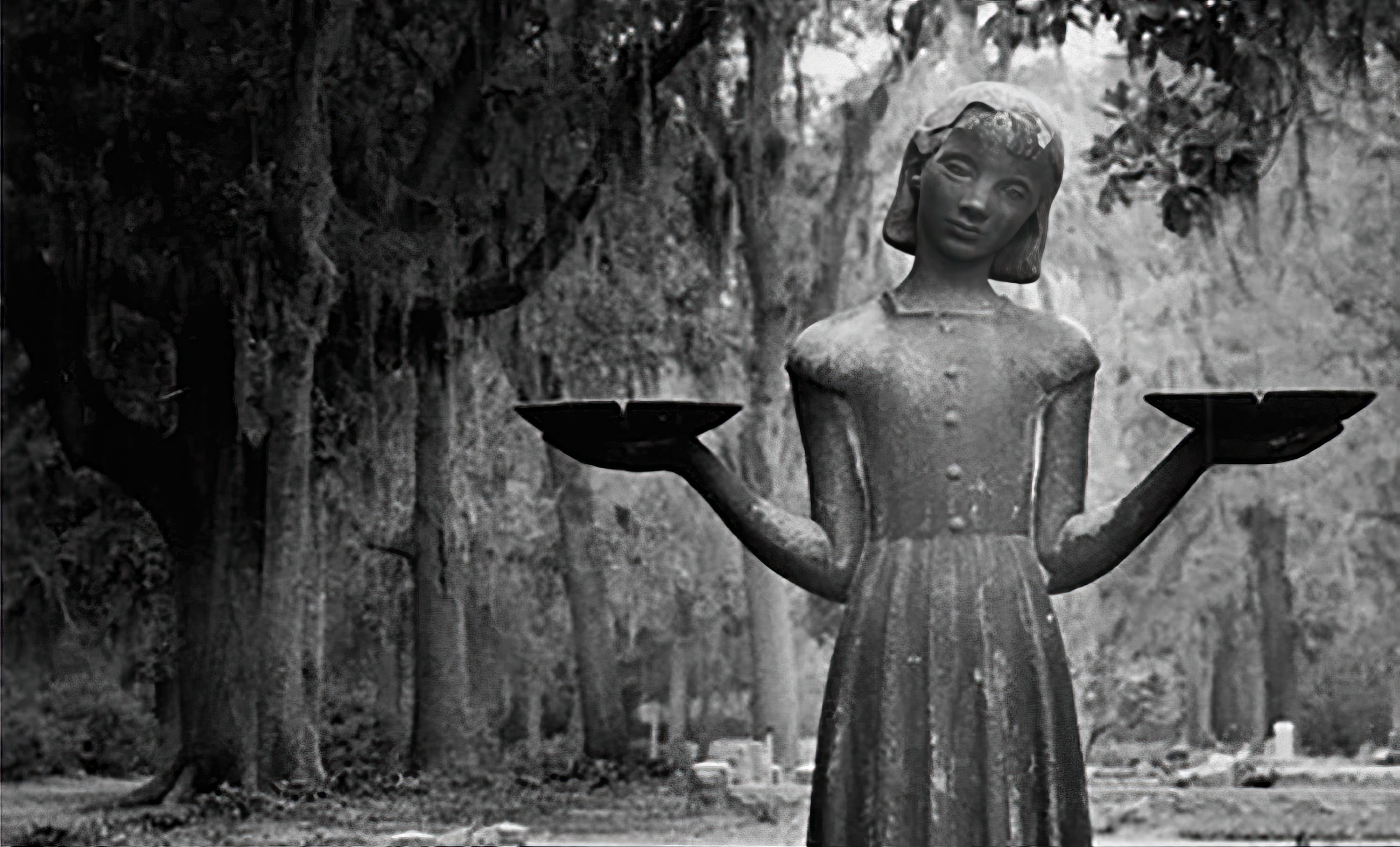
One of the book's most striking features is its vivid descriptions of the city itself. Berendt's prose brings Savannah to life, painting a picture of a place that is simultaneously beautiful and haunted. From the Spanish moss that hangs from the trees to the cemeteries that are filled with elaborate tombs and mausoleums, the book evokes a sense of Southern Gothic that is both eerie and enchanting.
Despite its length and complexity, Midnight in the Garden of Good and Evil is a remarkably engaging book. Berendt's prose is witty, and he has a keen eye for detail that allows him to create a fully-realized portrait of both the city and the trial. The book was a commercial and critical success, spending four years on The New York Times bestseller list and winning the 1995 nonfiction National Book Award.
In 1997, the book was adapted into a film directed by Clint Eastwood and starring Kevin Spacey as Jim Williams. While the film received mixed reviews, the book remains a beloved classic of Southern literature, offering a fascinating glimpse into a world that is both glamorous and sinister, beautiful, and haunting.
Malice in Wonderland: The Inside Story of the Police Investigation of The Laurel Canyon Murders (the true story depicted in the film "Wonderland")
Malice in Wonderland is a detailed true-crime account of one of Los Angeles' most notorious unsolved murder cases: the 1981 Wonderland Murders, also known as the Laurel Canyon Murders or the "Four on the Floor" killings. Written by former LAPD homicide detectives Tom Lange and Robert Souza, the book offers a firsthand perspective from two investigators who spent years pursuing the case.
The story begins in the seedy underworld of early-1980s Los Angeles, where drugs, organized crime, pornography, and celebrity culture intersected. At the center of the case is the Wonderland Gang, a group of cocaine dealers operating from a house on Wonderland Avenue in Laurel Canyon. On July 1, 1981, four people inside the house were brutally murdered and a fifth victim barely survived after being bludgeoned during a nighttime attack. The killings shocked Los Angeles because of their extraordinary violence and the mysterious circumstances surrounding them.
The investigation quickly led detectives into a labyrinth of criminals, drug traffickers, informants, and unreliable witnesses. One of the central figures was adult-film star John Holmes, whose involvement with both the Wonderland Gang and nightclub owner Eddie Nash made him a key suspect and witness. Holmes' shifting stories, questionable loyalties, and deep entanglement in the criminal world complicated the investigation for years.
Lange and Souza chronicle the painstaking police work involved in the case: interviewing witnesses, chasing leads, building evidence, and navigating legal obstacles. The authors describe how the investigation extended far beyond the crime scene itself, uncovering allegations of organized crime involvement, witness intimidation, jury tampering, corruption, and systemic obstacles that repeatedly hindered efforts to secure convictions.
The book follows the case through multiple arrests, trials, acquittals, appeals, and renewed investigations spanning nearly two decades. While many observers believed they knew who orchestrated the murders, proving it in court proved far more difficult. The detectives reveal the frustrations of watching suspects evade conviction despite years of investigative work and mountains of circumstantial evidence.
Along the way, the authors also discuss other major criminal cases from the era and place the Wonderland investigation within the broader landscape of Los Angeles crime during the 1980s and 1990s. These side stories illustrate the challenges faced by homicide detectives and provide context for the culture of violence and corruption that surrounded the case.
Ultimately, Malice in Wonderland serves as both a murder investigation and a memoir of police work, documenting the long pursuit of justice in a case that remains one of the most infamous unsolved crimes in California history.
BOOK NOTES:
Malice in Wonderland stands out from many true-crime books because it is written by the detectives who actually worked the case. Rather than relying on speculation, the authors provide a detailed account of how the investigation unfolded from the inside. This perspective gives the book an authenticity that many crime narratives lack.
- One of the book's greatest strengths is its depth. Lange and Souza take readers through every major development in the investigation, showing how evidence is gathered, how witnesses are evaluated, and how cases can be undermined by legal technicalities and human unreliability. Readers interested in real police work will find the procedural aspects fascinating.
- The authors also succeed in capturing the atmosphere of Los Angeles during a period when cocaine trafficking, organized crime, and the adult-entertainment industry overlapped in dangerous ways. The cast of characters (including John Holmes, Eddie Nash, and members of the Wonderland Gang) is so colorful and dysfunctional that the story often reads like crime fiction despite being entirely real.
- The book is one of the most comprehensive examinations of the Wonderland Murders available. It provides information and context that are absent from many documentaries and films based on the case. Readers seeking a sensationalized account may find it dense, but those interested in the realities of criminal investigation will appreciate its thoroughness.
SUMMARY: Malice in Wonderland is an engrossing and authoritative true-crime work that combines a notorious Hollywood-era murder mystery with an insider's look at homicide investigation. Rich in detail, filled with memorable characters, and grounded in firsthand experience, it is essential reading for anyone interested in the Wonderland Murders, Los Angeles crime history, or the complexities of long-term criminal investigations.
Original Gangster: The Real Life Story of One of America's Most Notorious Drug Lords (the true story depicted in the film "American Gangster")
Original Gangster: The Real Life Story of One of America's Most Notorious Drug Lords is a compelling and eye-opening autobiography that chronicles the life of Frank Lucas, a prominent figure in the world of drug trafficking in 20th-century America. Co-authored by Aliya S. King, this book provides a detailed and often chilling account of Lucas's rise to power, the inner workings of his criminal empire, and his eventual downfall.
The narrative delves into Lucas's early life, growing up in poverty-stricken North Carolina, and his entry into the world of crime in Harlem, New York. Drawing from his experiences working for notorious mobster Ellsworth "Bumpy" Johnson, Lucas climbs the ranks and eventually establishes himself as a major player in the drug trade. He gains notoriety for his innovative smuggling techniques, notably smuggling high-quality heroin from Southeast Asia in the coffins of American soldiers during the Vietnam War.
What sets Original Gangster apart is its unflinching portrayal of Lucas's criminal activities, providing an insider's perspective on the inner workings of the drug trade and the ruthlessness involved in maintaining control in a dangerous underworld. The book details the logistics of Lucas's drug operations, his alliances, and the violent conflicts with rival factions that defined his reign.
The narrative is also a deeply personal exploration of Lucas's life, offering insights into his motivations, mindset, and the moral ambiguities he faced. It humanizes Lucas, depicting him not just as a criminal mastermind but as a complex individual shaped by his circumstances, ambitions, and struggles.
Additionally, Original Gangster touches on the broader societal issues surrounding the drug trade, including the impact of drug addiction on communities and the consequences of law enforcement efforts to combat organized crime. Lucas reflects on the human toll of his actions and the repercussions of his choices, providing a nuanced perspective on the complexities of his criminal enterprise.
The book culminates in Lucas's arrest, prosecution, and his decision to cooperate with law enforcement, leading to the dismantling of his drug empire. Through this lens, the narrative sheds light on the complexities of crime, punishment, and redemption, prompting readers to contemplate the blurred lines between right and wrong in the pursuit of power and wealth.
SUMMARY: Original Gangster: The Real Life Story of One of America's Most Notorious Drug Lords offers a riveting and introspective account of Frank Lucas's life, providing a window into the underworld of drug trafficking while also exploring the human side of a notorious figure. Aliya S. King's collaboration with Lucas results in a narrative that is both gripping and thought-provoking, offering readers an unfiltered and candid look at the highs and lows of a life entrenched in crime and the pursuit of the American Dream.
LAbyrinth: The True Story of "City of Lies", the Murders of Tupac Shakur and Notorious B.I.G., and the Implication of the Los Angeles Police Department
LAbyrinth, written by Randall Sullivan (and adapted into the film "City of Lies"), is a meticulously researched and captivating exploration of the interconnected murders of two iconic rap artists, Tupac Shakur and Notorious B.I.G., their ties to Death Row Records' co-founder Suge Knight, and the broader context of alleged corruption within the Los Angeles Police Department.
Sullivan, a seasoned investigative journalist, pieces together the complex web of events leading up to the murders of Tupac and Notorious B.I.G., shedding light on the cultural and socio-political landscape of the 1990s hip-hop industry and the entanglement of the music scene with criminal elements.
The book delves into the rivalry between the East Coast and West Coast rap scenes, culminating in the highly publicized feud between Tupac Shakur and The Notorious B.I.G. Sullivan untangles the intricate relationships between these artists, their entourages, and the shadowy figures within the music industry, illustrating how their lives and careers were shaped by a combustible mix of fame, power, and gang affiliations.
Central to the narrative is the figure of Suge Knight, the enigmatic and controversial CEO of Death Row Records. Sullivan explores Knight's role in the lives of Tupac and Notorious B.I.G., as well as his connections to criminal organizations and the pervasive influence he wielded within the music industry.
LAbyrinth investigates the alleged involvement of corrupt LAPD officers in the murders and the broader implications of systemic corruption within the police department. Sullivan navigates through the LAPD's history, uncovering instances of misconduct, cover-ups, and the pervasive culture of corruption that tainted law enforcement efforts to solve these high-profile homicides.
The book examines the investigations, missteps, and conspiracy theories surrounding the murders, painting a vivid picture of a tangled web of motives, egos, and vendettas. Sullivan presents a narrative that goes beyond the surface, delving into the personal lives, vulnerabilities, and ambitions of the key players involved in these tragic events.
SUMMARY: Labyrinth: The True Story of City of Lies, the Murders of Tupac Shakur and Notorious B.I.G., and the Implication of the Los Angeles Police Department is not just a true crime exposé; it is a gripping portrait of an era, a cultural phenomenon, and the dark underbelly of the music industry. Sullivan's exhaustive research, attention to detail, and compelling storytelling create a narrative that captivates readers, prompting reflection on the far-reaching consequences of unchecked power, institutional corruption, and the intertwining of music, fame, and violence in America's urban landscape.
In Cold Blood (the true story depicted in the films "Capote", "Infamous", and "In Cold Blood")
Published in 1966, In Cold Blood is author Truman Capote's groundbreaking work of narrative nonfiction that chronicles the brutal 1959 murders of the Clutter family in Holcomb, Kansas. Widely regarded as the book that popularized the "nonfiction novel," Capote spent nearly six years researching the crime, interviewing investigators, townspeople, and the killers themselves. The result is a meticulously detailed account that reads with the suspense and emotional depth of a novel while remaining rooted in documented events.
Rather than simply recounting a sensational murder case, Capote examines the social, psychological, and moral forces that culminated in one of America's most shocking crimes. The book explores the lives of both the victims and the perpetrators, asking difficult questions about violence, justice, and the nature of evil.
The book opens in the quiet farming community of Holcomb, Kansas, on November 15, 1959. The Clutter family is introduced as one of the most respected families in the area. Herbert Clutter is a prosperous wheat farmer known for his integrity, generosity, and strict moral values. His wife, Bonnie, struggles with chronic depression but remains devoted to her family. Their children, Nancy and Kenyon, still live at home. Nancy is popular, talented, and admired throughout the community for her kindness and involvement in school and church activities. Kenyon is quieter, mechanically gifted, and deeply attached to his family.
Capote devotes considerable attention to the ordinary routines of the Clutters' final day. Nancy bakes pies for neighbors, Kenyon works on a woodworking project, and Herbert attends to his farm business. These mundane details create an intimate portrait of the family before tragedy strikes.
Running parallel to the Clutters' story is the introduction of Richard "Dick" Hickock and Perry Smith, two recently paroled ex-convicts traveling across Kansas. Dick is confident, manipulative, and impulsive. He learns from a former prison cellmate that Herbert Clutter supposedly keeps a large safe filled with cash inside his farmhouse. Believing the robbery will be easy, Dick recruits Perry to help him. Perry is one of the most fascinating figures in American true crime literature. Small in stature, physically damaged from a motorcycle accident, and haunted by an abusive childhood, Perry dreams of finding treasure, becoming a musician, and escaping his troubled life. He possesses moments of remarkable sensitivity but also harbors violent fantasies and profound emotional instability. As the two men drive toward Holcomb, Capote alternates between their journey and the peaceful evening unfolding inside the Clutter home, steadily building suspense.
Late that night, Dick and Perry enter the Clutter farmhouse expecting to steal thousands of dollars. They quickly discover that the rumored safe does not exist. The only money they find is about fifty dollars. Despite the failed robbery, the pair bind Herbert, Bonnie, Nancy, and Kenyon in separate rooms. Over several tense hours, the situation deteriorates. Although the Clutters cooperate fully and offer no resistance, Perry ultimately shoots each family member with a shotgun. The murders are shocking not because of rage or revenge but because they appear almost entirely pointless. Four innocent people die over virtually nothing. The killers leave with only a small amount of cash, a portable radio, and a pair of binoculars.
The murders devastate Holcomb. Residents who once left doors unlocked become fearful and suspicious of one another. The Kansas Bureau of Investigation assigns veteran agent Alvin Dewey to lead the investigation. Initially, detectives have almost no evidence. There is no obvious motive, no eyewitnesses, and few physical clues. The breakthrough comes from Floyd Wells, Dick's former prison cellmate, who realizes he may have unintentionally inspired the crime by mentioning the nonexistent safe. Wells informs authorities, placing Dick and Perry under suspicion. The two fugitives flee across several states and eventually travel to Mexico in hopes of beginning new lives. Finding neither money nor opportunity there, they return to the United States. They are arrested in Las Vegas after investigators trace them through stolen checks and other evidence.
Once in custody, Dick quickly attempts to shift blame onto Perry. Perry initially denies involvement but eventually gives a detailed confession. Capote presents the confession without sensationalism, emphasizing the emotional and psychological complexity behind Perry's actions. Perry admits pulling the trigger but insists the Clutters never threatened him. He describes Herbert Clutter as a genuinely kind man and later reflects that there was "no reason" for the murders. The confessions finally provide investigators with a complete reconstruction of the crime.
Dick and Perry are tried together in Kansas. Their defense attorneys argue that Perry's mental illness and traumatic upbringing diminished his responsibility, but the jury rejects this argument. Both men are convicted of first-degree murder. They are sentenced to death. Capote devotes significant attention to the lengthy appeals process that follows. Years pass while legal motions work through the courts. The killers spend much of that time awaiting execution inside the Kansas State Penitentiary.
The final chapters are quiet, reflective, and emotionally complex. In April 1965, Dick Hickock and Perry Smith are executed by hanging. Capote portrays neither man as a monster nor as a victim. Instead, he presents two deeply flawed human beings whose choices destroyed innocent lives and ultimately led to their own deaths. The book concludes with Alvin Dewey visiting the Clutter family graves. He encounters Nancy's childhood friend Susan Kidwell, and together they reflect briefly on the passage of time and the enduring pain left by the murders. The ending provides no easy moral resolution. Justice has been carried out according to the law, yet the loss suffered by the Clutter family and the Holcomb community remains immeasurable.
BOOK NOTES:
Few books have transformed nonfiction as profoundly as In Cold Blood. Capote combines exhaustive reporting with literary storytelling, creating scenes rich in dialogue, characterization, and atmosphere. The result is a work that reads like a compelling novel while maintaining the factual framework of investigative journalism.
- The author's pacing is masterful. By alternating between the unsuspecting Clutter family and the approaching killers, he creates sustained tension despite the reader knowing the outcome from the outset.
- The book's greatest strength is its refusal to simplify anyone involved. Herbert Clutter emerges as a compassionate, disciplined man whose life exemplifies responsibility and generosity. Nancy Clutter becomes far more than a murder victim; Capote presents her as an intelligent, vibrant young woman with ambitions and deep community ties. Even more remarkable is Capote's portrayal of Perry Smith. Rather than reducing him to a one-dimensional villain, Capote explores his childhood abuse, loneliness, physical suffering, and unrealized dreams. This psychological depth has generated decades of debate over whether Capote became too sympathetic toward Perry, but it unquestionably gives the book extraordinary emotional complexity.
- Several enduring themes run throughout the book: The randomness and senselessness of violence, the contrast between rural innocence and criminal desperation, nature versus nurture in the development of violent offenders, the psychological effects of guilt, yhe limitations of the criminal justice system, capital punishment and moral responsibility, and the search for meaning in apparently meaningless tragedy
- Capote's prose is elegant, restrained, and highly descriptive. Rather than relying on sensational violence, he builds emotion through carefully observed detail and psychological insight. His descriptions of the Kansas landscape mirror the emotional isolation of the characters, while his dialogue often reveals personality through subtle understatement. The book's structure - moving seamlessly among victims, investigators, and killers - was highly innovative and remains influential today.
- Although widely considered a masterpiece, In Cold Blood has attracted criticism over the years. Some scholars have questioned the accuracy of certain reconstructed conversations and scenes, arguing that Capote occasionally blurred the line between documented fact and literary dramatization. Others believe his close relationship with Perry Smith may have influenced the portrayal of the killer, making him appear more sympathetic than some readers feel is warranted. These concerns do not erase the book's achievements, but they are worth keeping in mind when reading it as both literature and reported history.
SUMMARY: In Cold Blood remains one of the most influential true-crime books ever written and one of the defining works of twentieth-century American literature. Its careful reconstruction of the Clutter murders, combined with Capote's extraordinary storytelling ability, elevated crime reporting into a literary art form and inspired generations of writers in both journalism and nonfiction. The book succeeds because it is not merely about a murder. It is about ordinary lives interrupted by extraordinary violence, the psychological complexities of those who commit horrific acts, and a society struggling to understand how such crimes can occur. More than sixty years after its publication, it remains gripping, thought-provoking, and emotionally devastating.