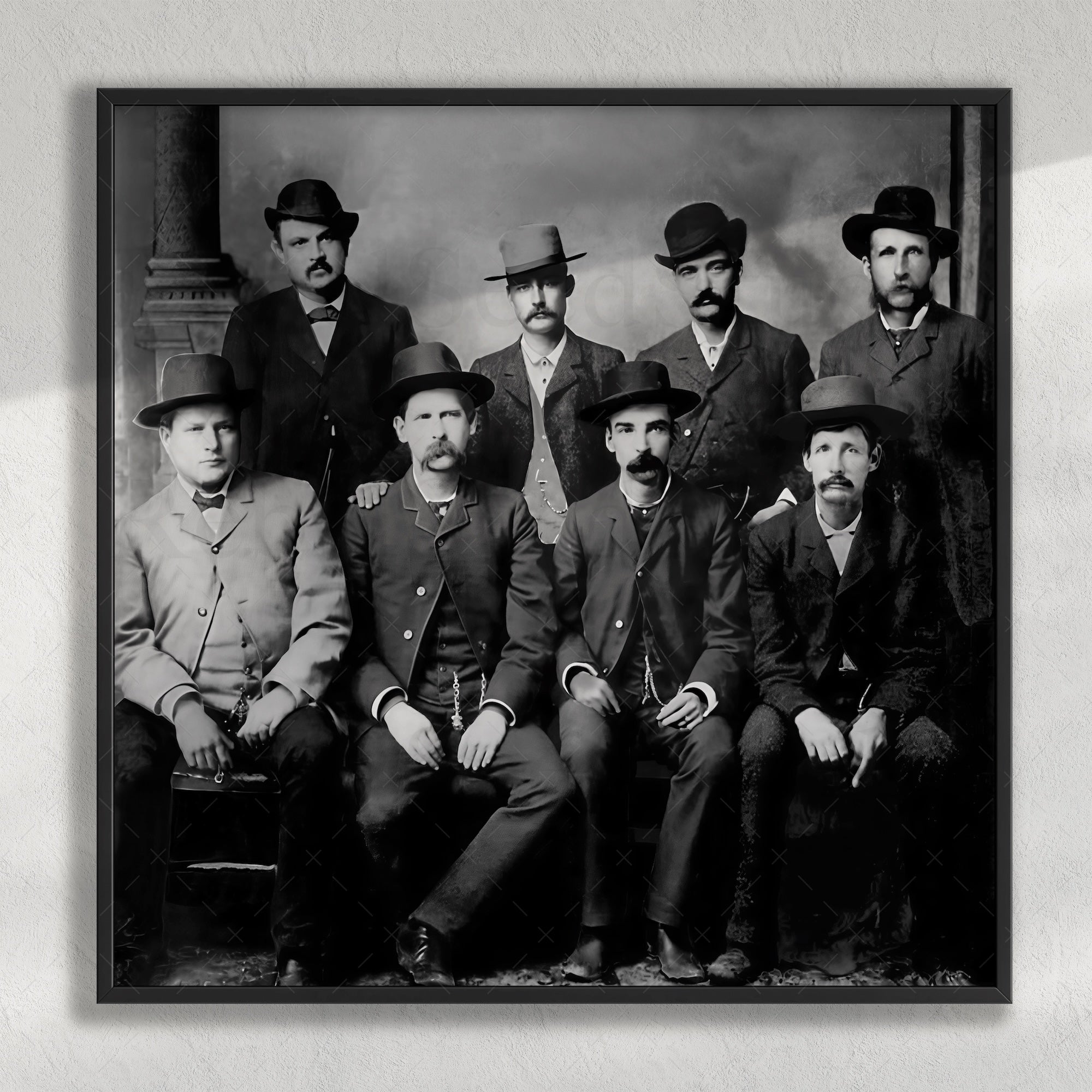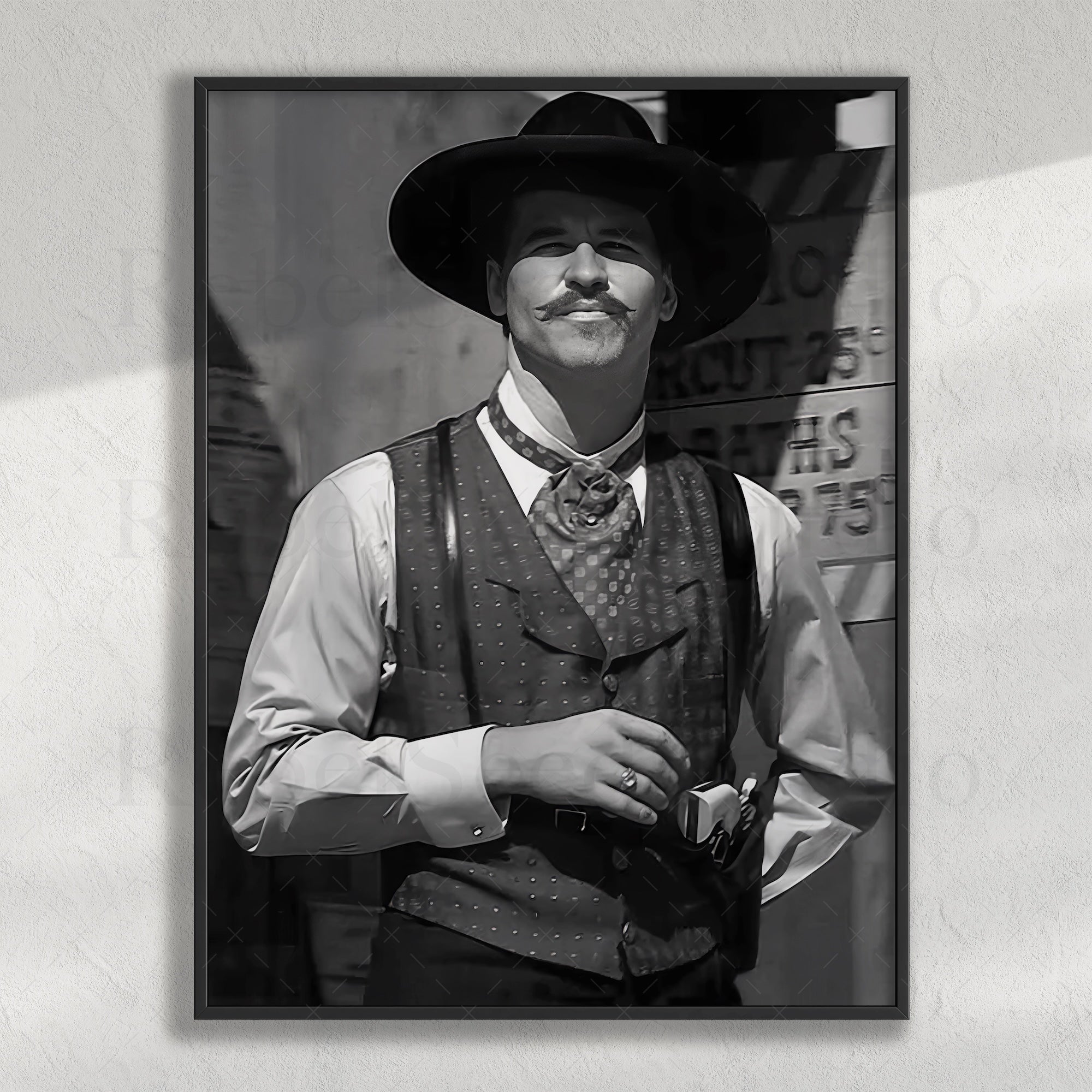

Wyatt Earp & Doc Holliday Stories: 5 Books Worth Reading (Book Notes)
Most books in this curated list are available from online bookstores or via your preferred bookseller.
Tombstone: The Earp Brothers, Doc Holliday and the Vendetta Ride from Hell
Tom Clavin’s Tombstone is a vivid retelling of one of the most iconic events of the American Wild West: the Gunfight at the O.K. Corral. This nonfiction book takes readers deep into the lives of the legendary figures involved in the famous shootout in Tombstone, Arizona, including Wyatt Earp, his brothers, and their close ally Doc Holliday. Beyond the gunfight itself, Clavin focuses on the political, social, and economic forces that transformed Tombstone from a promising mining town into the backdrop for one of the Wild West’s most famous confrontations.
Clavin begins by tracing the origins of the key players, particularly Wyatt Earp and his brothers - Virgil, Morgan, and James - detailing their family background and early adventures that eventually led them to the bustling town of Tombstone. Wyatt Earp, the central figure of the book, is portrayed as a lawman with a complicated sense of justice, while Doc Holliday, his infamous companion, emerges as a deadly but ill-tempered gambler suffering from tuberculosis, whose bond with Earp forms a central theme in the story.
The book’s early chapters focus on Tombstone as a boomtown in the late 1870s and early 1880s, fueled by a silver rush and populated by a colorful cast of prospectors, cowboys, lawmen, and outlaws. Clavin paints a picture of a place filled with opportunity and danger, where corruption, crime, and violence simmered beneath the surface. This atmosphere set the stage for the eventual clash between the law-abiding Earp brothers and the Clanton-McLaury gang, who represented the wild and chaotic side of frontier life.
The tension between the Earps and the cowboys escalated over time, leading to the famous gunfight at the O.K. Corral on October 26, 1881. Clavin’s detailed and gripping account of the gunfight explores not just the action but the buildup - political and personal - that made it inevitable. The shootout, which lasted less than 30 seconds, saw the Earps and Doc Holliday facing off against the Clanton and McLaury brothers. It left three men dead and cemented the Earps’ reputations as lawmen, although it would also haunt them for years to come.
Following the gunfight, the book focuses on the fallout, particularly the Earp brothers’ quest for vengeance after the ambush and murder of Morgan Earp. Wyatt Earp, consumed by grief and a desire for justice, embarked on a vendetta ride that took him and his posse across Arizona Territory, hunting down those he believed responsible for his brother’s death. This vendetta, marked by more violence and extrajudicial killings, would further entrench Earp’s legacy as both a hero and a controversial figure.
Clavin also explores the complex relationship between Wyatt Earp and Doc Holliday, whose shared experiences in Tombstone and on the vendetta ride solidified their place in Wild West folklore. The book paints Doc Holliday as a tragic figure - ill, dangerous, and brilliant - whose loyalty to Earp was one of the most defining aspects of his life.
While the gunfight and the vendetta ride are central to the narrative, Clavin also provides a broader historical context, explaining how Tombstone’s brief period of prosperity came to an end as the silver mines dried up, and how the Wild West began to fade as the frontier was slowly tamed by law and civilization.
BOOK NOTES:
Tombstone is a well-researched, fast-paced, and engaging retelling of one of the most mythologized events in American history. By providing an in-depth look at not only the famous gunfight but also the lives and motives of the key figures involved, Clavin offers a nuanced perspective that goes beyond the typical black-and-white portrayals of the Old West.
- Clavin delves deeply into the historical record, utilizing letters, newspaper reports, and firsthand accounts to build a comprehensive picture of the people and events that defined Tombstone. His meticulous research adds authenticity to the narrative, making the book both informative and captivating.
- One of the book’s strengths is its balanced portrayal of the key figures. Wyatt Earp, for example, is not simply a heroic lawman but a complex individual shaped by personal loss, moral ambiguity, and a relentless quest for justice. Doc Holliday, similarly, is portrayed as more than just a gunslinger—he is a flawed, tragic figure whose friendship with Earp transcends the violence that defined his life.
- Clavin’s narrative style is engaging and accessible. He brings the historical events to life, making the book read like a novel while still maintaining historical accuracy. His descriptions of the gunfight, in particular, are gripping and cinematic in their detail.
- While the gunfight is the focal point, Clavin does an excellent job of situating the events within the broader context of the American West. He provides insight into the socio-political forces that shaped Tombstone, including the power struggles between cattle rustlers, miners, and law enforcement. This context enriches the reader’s understanding of why the events unfolded as they did.
- While the Earp brothers and Doc Holliday are given extensive treatment, the Clanton and McLaury brothers (the antagonists in the gunfight) receive comparatively less attention. More exploration of their motivations and backgrounds might have added further depth to the story.
SUMMARY: Tom Clavin’s Tombstone offers a richly detailed and exciting narrative that sheds light on one of the most famous events in American history - the Gunfight at the O.K. Corral - and the figures who participated in it. Clavin’s portrayal of Wyatt Earp, Doc Holliday, and the complex dynamics of life in Tombstone provides a nuanced, humanized account of the Old West. The book successfully balances historical analysis with thrilling storytelling, making it an excellent choice for readers interested in the Wild West, American history, or true crime. Tombstone stands as a definitive and well-rounded retelling of the events that made the town of Tombstone a legend. It captures both the allure and the brutality of frontier life, showing that the Wild West was not just about heroism and gunfights, but about survival, loyalty, and the complexities of justice in a lawless land.
Brothers of the Gun: Wyatt Earp, Doc Holliday, and a Reckoning in Tombstone
Brothers of the Gun, written by Mark Lee Gardner, is a dual biography and revisionist history that examines the lives, friendship, and violent partnership of Wyatt Earp and Doc Holliday. Rather than repeating familiar Western myths, Gardner reconstructs their story through primary sources, court records, letters, and contemporary accounts to present a nuanced portrait of two complex frontier figures and the events surrounding the famous 1881 Tombstone conflict.
The book explores their unlikely bond, the social and political tensions of the frontier, the Gunfight at the O.K. Corral, and the bloody aftermath that reshaped their reputations and helped create enduring American legends.
Gardner begins by tracing the formative experiences of Wyatt Earp and Doc Holliday, revealing how their backgrounds shaped their personalities and destinies. Wyatt Earp emerges as an ambitious and restless figure who moved frequently across the frontier working as a lawman, gambler, and businessman. His life alternated between enforcing the law and operating in morally ambiguous territory.
Doc Holliday, originally trained as a dentist, became a professional gambler after contracting tuberculosis. His declining health, volatile temperament, and loyalty to friends defined his later reputation. Gardner portrays both men not as clear heroes or villains but as products of the chaotic and violent environment of the American frontier. The narrative describes how Earp and Holliday first met in the cattle town of Dodge City in the late 1870s. Their friendship began when Holliday reportedly intervened during a confrontation that threatened Earp’s life, establishing a bond rooted in loyalty and mutual respect. Despite stark personality differences - Earp’s cool ambition versus Holliday’s reckless fatalism - the two formed a lasting alliance that would define their lives.
The central portion of the book focuses on Tombstone, Arizona, where Earp and his brothers became lawmen and confronted a loosely organized group of outlaws known as the Cowboys. Gardner explains the deeper causes of conflict: economic rivalry and control of regional power, political divisions and local corruption, cattle rustling and frontier law enforcement disputes, and competing claims of justice and authority The author emphasizes that the famous conflict was not simply a showdown between good and evil but part of a broader struggle for power and order in a rapidly changing frontier society.
The book’s centerpiece is the famous 1881 gunfight involving the Earps, Holliday, and their opponents. Gardner reconstructs the brief but consequential confrontation - lasting roughly thirty seconds - and examines conflicting eyewitness accounts. Rather than glorifying the event, he presents it as a chaotic clash shaped by fear, politics, and personal rivalry, later exaggerated by popular culture.
Following the murder of Wyatt’s brother Morgan, the Earps and Holliday embarked on a violent revenge campaign. This “vendetta ride” involved extralegal killings that blurred the line between justice and vengeance and ultimately forced them to flee Tombstone. Gardner explores the legal and moral consequences of these actions, portraying the protagonists as men willing to abandon lawful methods when driven by loyalty and retribution.
The book concludes by tracing the later lives of both men: Holliday’s decline and death from tuberculosis in Colorado, and Earp’s later years, during which he became a legendary figure whose reputation was shaped by journalists and Hollywood. Gardner shows how the myths surrounding them grew over time, often obscuring the complicated realities of their lives.
BOOK NOTES:
- One of the book’s greatest achievements is its dismantling of simplistic Western legends. Gardner demonstrates that frontier justice was messy and ambiguous, and he challenges romanticized portrayals of both men.
- The author neither condemns nor glorifies Earp and Holliday. He presents Earp as ambitious, pragmatic, and morally flexible, and Holliday as self-destructive yet fiercely loyal. This nuanced treatment gives depth to figures often reduced to stereotypes.
- The narrative recreates the atmosphere of frontier towns - saloons, gambling halls, brothels, and violent disputes - while grounding the story in documentary evidence.
- The emotional core of the book is the partnership between Earp and Holliday. Their loyalty, tension, and shared survival provide a compelling human dimension to the historical narrative.
SUMMARY: Brothers of the Gun is a compelling work of popular history that blends biography, frontier history, and myth criticism. It presents a vivid and balanced portrait of two iconic figures while emphasizing the ambiguity of justice and violence in the American West. The book succeeds both as an engaging narrative and as a corrective to romanticized Western folklore.
Dodge City: Wyatt Earp, Bat Masterson, and the Wickedest Town in the American West
In Dodge City: Wyatt Earp, Bat Masterson, and the Wickedest Town in the American West, author Tom Clavin recounts the captivating history of one of the most infamous frontier towns of the Old West, Dodge City, Kansas. The book brings to life the gritty, lawless world of the late 19th century, focusing on two legendary lawmen, Wyatt Earp and Bat Masterson, and their efforts to restore order in a town teetering on the edge of chaos.
The book begins by detailing the origins of Dodge City, which started as a small settlement but quickly grew into a bustling, violent town due to its location on the cattle trails. As herds of cattle were driven through the town, saloons, brothels, and gambling dens cropped up, making Dodge City notorious for its lawlessness and violence. The influx of cowboys, gunslingers, gamblers, and outlaws fueled a volatile mix of crime and chaos, earning Dodge City the title of the "wickedest town in the American West."
Wyatt Earp, an ambitious young man in search of fortune and adventure, arrives in Dodge City in the 1870s. Known for his sense of justice and fearlessness, Earp quickly gains a reputation as a lawman willing to stand up to the roughest elements of society. Clavin traces Earp’s early life, including his time in various frontier towns, and how his sense of justice and desire for fame made him a perfect candidate for a lawman in Dodge City.
Alongside Earp, Bat Masterson emerges as another key figure in the town’s law enforcement efforts. Masterson, a former buffalo hunter turned sheriff, is depicted as both a gambler and a man of integrity who is committed to bringing order to the West. The book chronicles the friendship between Earp and Masterson, as well as their individual and combined efforts to rid Dodge City of violence and lawlessness. Their shared goal of restoring peace and order forms the backbone of Clavin’s narrative.
Clavin also introduces a colorful cast of characters, including famous outlaws, gunfighters, and gamblers, such as Doc Holliday, the James-Younger Gang, and Clay Allison, all of whom played pivotal roles in shaping Dodge City’s reputation. The book provides detailed accounts of infamous gunfights, tense standoffs, and the day-to-day challenges Earp and Masterson faced as they sought to maintain law and order.
The book also explores the broader context of life in the American West, describing how the frontier’s lawlessness was a reflection of the rapid expansion of American society, the impact of the cattle industry, and the clash between settlers and Native American tribes. Dodge City, in many ways, epitomized the Wild West, and Clavin delves into the town’s role in shaping the mythology of the frontier.
Clavin’s narrative builds toward the eventual decline of Dodge City’s lawless era, as the railroad expanded and cattle drives became less central to the town’s economy. Earp and Masterson both moved on to other pursuits, with Earp eventually heading west to Tombstone, Arizona, where he would become involved in the infamous Gunfight at the O.K. Corral. Masterson became a journalist and continued to play a significant role in American frontier history.
BOOK NOTES:
- The book is a well-researched, entertaining, and vivid account of one of the most iconic towns in the American West. The book offers a compelling blend of historical narrative, biography, and action-packed storytelling, with its focus on Wyatt Earp and Bat Masterson adding a personal dimension to the broader history of Dodge City.
- One of the standout features of Clavin’s work is the level of historical detail he brings to the story. Clavin clearly did extensive research, drawing on primary sources, contemporary accounts, and previous biographies of Earp and Masterson to present a thorough and accurate portrayal of life in Dodge City. Readers gain a deeper understanding of the complexities of the cattle industry, the political and economic forces that shaped the town, and the daily dangers faced by its inhabitants.
- By focusing on the lives of Wyatt Earp and Bat Masterson, Clavin grounds the historical events in a human context. Both men are portrayed with nuance, and their friendship is a central thread that ties the narrative together. Earp’s stoic demeanor and relentless pursuit of justice are contrasted with Masterson’s more affable and adventurous personality. The evolution of their characters throughout the book is handled skillfully, making them both relatable and heroic figures in the Wild West.
- Dodge City reads like an action-packed Western at times, with thrilling accounts of gunfights, standoffs, and shootouts that give the book a cinematic feel. The excitement of law enforcement in a town plagued by violence is vividly portrayed, and Clavin captures the drama and tension of key moments in the town’s history.
- While the focus is on Dodge City and its lawmen, Clavin also provides a rich backdrop of the larger forces shaping the American frontier during this time. He explores the cattle drives, the conflicts between settlers and Native Americans, and the expansion of the railroad, all of which influenced the development of Dodge City and other frontier towns.
SUMMARY: Tom Clavin’s Dodge City is a highly engaging and accessible account of one of the most famous towns in the American West. With its focus on two legendary lawmen, Wyatt Earp and Bat Masterson, the book brings to life the drama, danger, and excitement of life on the frontier. Clavin’s thorough research and vivid storytelling make this an enjoyable read for fans of Western history, as well as those interested in the lives of iconic figures who shaped the mythology of the Wild West.
While the book might not delve deeply into the more complex social issues of the era, it excels as an action-driven historical narrative that captures the essence of Dodge City’s wild and violent past. It’s a worthy addition to the canon of books about the American West, particularly for readers fascinated by the larger-than-life personalities of Wyatt Earp and Bat Masterson.
The Last Gunfight: The Real Story of the Shootout at the O.K. Corral and How It Changed the American West
The Last Gunfight by Jeff Guinn is a major work of revisionist Western history that reconstructs the famous 1881 shootout in Tombstone, Arizona, separating historical reality from popular myth. Through extensive archival research - diaries, letters, court records, and eyewitness testimony - Guinn presents a detailed account of the lives of Wyatt Earp, Doc Holliday, and their rivals, showing that the confrontation was not a simple battle between good and evil but the result of complex social, political, and economic tensions.
The book also examines how the event helped create the mythology of the American West and influenced later perceptions of frontier justice. Guinn begins by placing the Tombstone conflict within the broader history of American westward expansion. He describes the transformation of the frontier from a loosely regulated territory of ranchers and miners into an increasingly structured society shaped by commerce, law enforcement, and political power.
The author explains that the American West was not a constant battleground of gunfighters but a developing region where economic opportunity, social tension, and competing visions of order created periodic outbreaks of violence.
A major section of the book examines the Earp family’s rise on the frontier. Wyatt Earp is portrayed not as a heroic lawman but as an ambitious entrepreneur, gambler, and political aspirant seeking power and influence. His brothers, particularly Virgil and Morgan, worked as law officers but were also deeply involved in Tombstone’s political struggles. Guinn shows that the Earps were motivated by personal advancement as much as law enforcement, complicating their traditional heroic image.
The book explores the role of Doc Holliday, a tuberculosis-stricken dentist turned gambler known for his volatile temperament and fierce loyalty to Wyatt Earp. Guinn depicts Holliday as both dangerous and charismatic - a figure shaped by illness, fatalism, and a willingness to use violence to settle disputes.
The narrative then shifts to Tombstone, a booming mining town marked by wealth, corruption, and political rivalry. Guinn describes the opposing faction known as the “Cowboys,” including: the Clanton family, the McLaury brothers, and other ranchers and cattle rustlers. These men represented a different economic and social order based on ranching and cross-border cattle trade. The conflict between the Earps and the Cowboys reflected deeper struggles over authority, law enforcement, and regional power.
Guinn carefully reconstructs the events that led to the confrontation: disputes over law enforcement authority, political competition for the Cochise County sheriff’s office, accusations of cattle rustling and robbery, personal feuds and threats, as well as misunderstandings and escalating hostility. Rather than depicting a planned showdown, the author shows how a chain of decisions, pride, and fear pushed both sides toward violence.
The centerpiece of the book is a detailed reconstruction of the October 26, 1881 confrontation. Guinn analyzes the famous 30-second gunfight step by step, examining conflicting testimonies and evidence. The author emphasizes that the event was neither inevitable nor heroic but a tragic collision of personalities and circumstances. Following the gunfight, legal hearings investigated whether the Earps and Holliday acted lawfully. Though cleared of wrongdoing, tensions continued.
After Morgan Earp’s later murder, Wyatt Earp and his allies launched a revenge campaign known as the Vendetta Ride, killing several opponents and eventually fleeing Arizona to avoid prosecution. Guinn portrays these actions as blurring the boundary between law enforcement and vigilantism. The final section explores how the shootout transformed into legend. Guinn shows that: the gunfight became symbolic of frontier justice, later writers and filmmakers simplified the story into hero-versus-villain narratives, Wyatt Earp’s reputation grew dramatically after his death, and the event helped shape America’s cultural image of the Old West. The book concludes that the real story reveals a morally complex world far removed from romantic Western mythology.
BOOK NOTES:
- Guinn’s greatest achievement is his exhaustive use of primary sources and archival evidence. His reconstruction of events and motivations provides one of the most detailed accounts of the Tombstone conflict.
- The book dismantles traditional Western stereotypes by presenting both sides as flawed individuals with competing interests rather than clear heroes and villains.
- Instead of focusing solely on the gunfight, Guinn explains the broader economic, political, and cultural forces shaping frontier society, giving readers a deeper understanding of the American West’s transformation.
- The book reads with dramatic tension while maintaining historical rigor, making complex history accessible to general readers.
SUMMARY: The Last Gunfight is one of the most authoritative and engaging modern histories of the Tombstone conflict. It combines biography, social history, and myth analysis to reveal a complex and morally ambiguous frontier world. Guinn succeeds in replacing romantic legend with documented reality while still delivering a compelling narrative.
Ride the Devil’s Herd: Wyatt Earp's Epic Battle Against the West's Biggest Outlaw Gang
Ride the Devil’s Herd by John Boessenecker is a meticulously researched historical account of Wyatt Earp’s battle with the notorious Cowboy Gang in the American West. The book focuses on Earp’s time in Tombstone, Arizona, during the 1880s and offers a fresh perspective on the events leading up to and following the infamous Gunfight at the O.K. Corral. Boessenecker dives deeply into the context of this legendary conflict between lawmen like Wyatt Earp and his brothers, and the outlaw gang known as the Cowboys, led by figures like Ike Clanton and Curly Bill Brocius.
The Cowboys were a loosely organized group of outlaws involved in cattle rustling, stagecoach robberies, and other criminal activities that plagued Arizona Territory during this period. Earp, initially a lawman in various parts of the American West, moved to Tombstone to seek fortune and found himself caught up in the violent struggle for law and order in a town overrun by outlaws. What began as a clash between local law enforcement and a criminal element escalated into a personal vendetta that shaped the history of the Old West.
The narrative builds up to the climactic event of the Gunfight at the O.K. Corral, a famous thirty-second shootout that took place on October 26, 1881. This pivotal moment, where Wyatt Earp, his brothers Virgil and Morgan, and their ally Doc Holliday faced off against members of the Cowboy Gang, forms the heart of the story. Boessenecker not only recounts the shootout in vivid detail but also explores the larger ramifications of the battle, including the retaliatory attacks on the Earp family, leading to Wyatt’s vendetta ride in pursuit of Cowboy members after his brother Morgan was murdered.
The book highlights the broader context of lawlessness in the American West, the corruption that permeated both the legal and criminal sides of the frontier, and the intense personal feuds that drove much of the violence during this period. In addition to recounting the famous figures of Wyatt Earp and Doc Holliday, Boessenecker gives substantial attention to the Cowboys themselves, including Ike Clanton, Curly Bill Brocius, and Johnny Ringo, offering a fuller picture of the outlaw gang that terrorized the region.
BOOK NOTES:
- One of the standout elements of Ride the Devil’s Herd is the depth of research Boessenecker brings to the narrative. The book is built on a solid foundation of historical documents, court records, letters, and firsthand accounts, which allow the author to reconstruct events with an impressive level of accuracy. Boessenecker presents a thorough account of not only the Gunfight at the O.K. Corral but also the social and political environment of Tombstone, which was rife with tension, corruption, and lawlessness.
- Boessenecker avoids the trap of glorifying Wyatt Earp, presenting him as a flawed but determined figure. While Earp is often portrayed as a larger-than-life lawman in Western mythology, Ride the Devil’s Herd offers a more nuanced portrayal, showing Earp as a complex man driven by both a desire for justice and personal vengeance. This balanced approach is one of the book’s major strengths, as it offers a more realistic portrayal of frontier life and the personalities involved.
- Boessenecker does an excellent job of fleshing out the Cowboys, who are often depicted as faceless villains in Western history. The book provides detailed backgrounds on key figures like Ike Clanton, Curly Bill Brocius, and Johnny Ringo, exploring their motivations and the circumstances that led them into lives of crime. By humanizing the Cowboys, Boessenecker adds depth to the story and avoids the simplistic good-versus-evil narrative that often accompanies retellings of the Gunfight at the O.K. Corral.
- The book delves into the murky legal world of the Old West, where lawmen and outlaws sometimes blurred lines. The tensions between Earp’s role as a lawman and his personal quest for revenge after his brother’s death illustrate the complexities of frontier justice, where legal authority was often weak and violence was the primary means of resolving disputes. This nuanced depiction of justice on the frontier adds a layer of sophistication to the story.
SUMMARY: Ride the Devil’s Herd: Wyatt Earp's Epic Battle Against the West's Biggest Outlaw Gang by John Boessenecker is an expertly researched and well-balanced account of the violent conflict between Wyatt Earp and the Cowboy Gang in Tombstone, Arizona. Boessenecker brings new life to the often-told tale of the Gunfight at the O.K. Corral by providing a detailed and nuanced exploration of the people and events that led to the showdown. Through careful research and attention to historical accuracy, the book sheds light on the moral ambiguities of frontier justice and the personal vendettas that fueled much of the violence in the American West.
Readers who enjoy in-depth historical accounts and those with an interest in the true history behind the legends of the Old West will find Ride the Devil’s Herd to be a rewarding and insightful read. While the level of detail may be overwhelming for some, the book is a must-read for anyone looking for a thorough understanding of Wyatt Earp’s battle against the Cowboy Gang and the broader context of law and order in the American frontier.
Also See...
The Summer of 1876: Outlaws, Lawmen and Legends in the Season That Defined the American West