
Modern Warfare Stories from WWI to GWOT: 12 Books Worth Reading (Book Notes)
Most books in this curated list are available from online bookstores or via your preferred bookseller.
13 Hours: The Inside Account of What Really Happened in Benghazi
13 Hours: The Inside Account of What Really Happened in Benghazi written by Mitchell Zuckoff with the Annex Security Team, provides a detailed and gripping account of the 2012 terrorist attacks on the U.S. diplomatic compound and a nearby CIA annex in Benghazi, Libya. The book is based on firsthand testimonies from the six American security operators who defended the compound during the 13-hour ordeal.
The book begins by setting the scene in Benghazi, a city rife with political instability and militant factions following the fall of Muammar Gaddafi. On the night of September 11, 2012, the U.S. diplomatic compound came under attack by heavily armed militants. The narrative quickly shifts to the six-man team of CIA contractors, former military personnel known as Global Response Staff (GRS), who were stationed at the CIA annex about a mile from the diplomatic compound.
The six security operators - Mark "Oz" Geist, John "Tig" Tiegen, Kris "Tanto" Paronto, Tyrone "Rone" Woods, Jack Silva, and Dave "D.B." Benton - were thrust into action when the assault began. Despite being ordered to "stand down" by their superiors, the team decided to disobey and rushed to the diplomatic compound to provide assistance.
Upon arrival, the GRS team found the situation dire. The diplomatic compound was ablaze, and Ambassador Chris Stevens was missing. The team managed to rescue surviving personnel, including Sean Smith, a State Department communications officer who had already perished by the time they arrived.
The narrative intensifies as the team then returns to the CIA annex, believing the worst might be over. However, the annex soon comes under sustained attack. Over the next several hours, the team of six men defends the annex against waves of militant assaults. The descriptions of the firefights are vivid and harrowing, emphasizing the bravery and skill of the operators.
Tragically, two of the team members, Tyrone Woods and Glen Doherty, who arrived as part of a quick reaction force from Tripoli, are killed by a mortar attack during the early hours of September 12. Their deaths add a somber weight to the narrative, highlighting the severe consequences of the attack.
BOOK NOTES:
- The book highlights the extraordinary bravery and selflessness of the GRS team, who risked their lives to save others despite overwhelming odds.
- The narrative captures the chaotic nature of the Benghazi attacks, emphasizing the confusion and lack of coordination among various U.S. entities.
- The account subtly critiques the political and bureaucratic shortcomings that may have exacerbated the crisis, including the contentious "stand down" order.
- Mitchell Zuckoff’s writing is clear, concise, and deeply engaging. His journalistic approach ensures that the narrative is both factual and compelling, providing a detailed chronology of events while maintaining a strong emotional impact. The use of firsthand accounts adds authenticity and immediacy to the story.
SUMMARY: 13 Hours: The Inside Account of What Really Happened in Benghazi is a powerful and moving narrative that honors the courage and sacrifice of the men who defended the U.S. diplomatic and CIA facilities in Benghazi. Mitchell Zuckoff's meticulous research and engaging storytelling provide readers with a comprehensive and harrowing account of the events. The book not only sheds light on the complexities and dangers faced by security personnel in volatile regions but also serves as a tribute to their heroism.
Black Hawk Down: A Story of Modern War
Black Hawk Down: A Story of Modern War by Mark Bowden chronicles the harrowing events of the Battle of Mogadishu, which took place on October 3, 1993, during a U.S. military operation in Somalia. The book details the mission’s failure and its aftermath, offering a deep and comprehensive look into the intense combat, the experiences of soldiers on the ground, and the political ramifications of the operation.
The narrative begins with an overview of the American involvement in Somalia, part of a U.N. humanitarian mission aimed at alleviating the effects of famine and civil war. The mission soon shifts toward capturing the Somali warlord Mohamed Farrah Aidid, whose forces were responsible for the violence in the country. U.S. forces, including elite Army Rangers and Delta Force operatives, are deployed to capture his lieutenants.
The battle begins when a team of American soldiers is sent to apprehend one of Aidid’s top commanders in a fortified building in the capital city of Mogadishu. What should have been a quick and efficient operation quickly devolves into chaos when two Black Hawk helicopters are shot down by Somali militia, killing several soldiers and leaving others stranded in the middle of a hostile city. As the soldiers struggle to rescue their comrades, they face overwhelming opposition from heavily armed Somali forces.
The book provides gripping accounts of the soldiers’ experiences in the firefight, their attempts to survive, and the sense of comradery that developed among them in the face of impossible odds. It also highlights the leadership, bravery, and sacrifice of several soldiers, while examining the failures of military strategy and logistics. The operation becomes a disaster as the U.S. military is forced to call in reinforcements and ultimately retreat after hours of intense fighting, resulting in the deaths of 18 American soldiers and hundreds of Somali casualties.
Bowden’s narrative is rich with details, drawn from interviews with the soldiers who participated in the battle, as well as from extensive research and firsthand accounts. He paints a vivid picture of the chaos, courage, and human cost of war, illustrating how the Battle of Mogadishu became a pivotal moment in modern military history. The book also examines the political and media fallout that followed, including the eventual withdrawal of U.S. forces from Somalia.
BOOK NOTES:
- Bowden conducted extensive interviews with soldiers, military personnel, and others involved in the operation, giving readers a comprehensive and accurate account of the events. The level of detail adds authenticity and depth to the narrative.
- The writing is both immersive and intense, capturing the high-stakes atmosphere of the battle. Bowden’s ability to convey the chaos of combat, the tension between soldiers and their environment, and the emotional and psychological toll of war is striking.
- The book does not just recount the tactical movements of the battle; it delves deeply into the experiences of the soldiers involved. It paints a picture of bravery, fear, and camaraderie, making the events personal and emotionally compelling.
- Bowden provides a nuanced view of both the American soldiers and the Somali fighters, offering insights into the motivations, challenges, and decisions faced by both sides. This adds complexity to the narrative, avoiding a simple us-versus-them portrayal.
- The book also delves into the broader political context of the mission, exploring the reasons behind the U.S. involvement in Somalia, the consequences of the battle, and the impact on American military strategy in the years that followed.
SUMMARY: Black Hawk Down is an outstanding and compelling account of one of the most intense military engagements of the late 20th century. Mark Bowden’s meticulous research, combined with his powerful storytelling, makes this book a must-read for those interested in modern warfare, military history, and the human cost of conflict. It is a powerful reminder of the sacrifices made by soldiers and the chaos and unpredictability of war.
The First Wave: The D-Day Warriors Who Led the Way to Victory in World War II
The First Wave, written by acclaimed military historian Alex Kershaw, is a gripping and deeply human chronicle of the Allied soldiers who were the first to land on the beaches of Normandy on June 6, 1944 - D-Day. With precision and pathos, Kershaw honors the extraordinary bravery, sacrifice, and leadership of those who led the charge during the most pivotal invasion of World War II. The book is both a panoramic view of Operation Overlord and an intimate portrait of individual heroism, threading together personal stories to illustrate the broader arc of the Allied victory in Europe.
Kershaw structures the book chronologically around D-Day, beginning with the tense buildup to the invasion, the amphibious landings themselves, and the grueling hours and days that followed. Rather than a general survey of the operation, the book zeroes in on a tightly focused cast of real-life characters - “the first wave” of soldiers who bore the brunt of the initial assault.
Among the standout figures profiled:
- Lieutenant Bob Edlin, who led the first platoon to scale the cliffs at Pointe du Hoc, helping silence German guns that could have devastated the invasion force.
- Brigadier General Norman “Dutch” Cota, who landed with the 29th Infantry Division at Omaha Beach and famously rallied demoralized troops with the cry, “Rangers, lead the way!”
- Major John Spalding, a quiet but courageous officer who led a small band through treacherous terrain under relentless fire, showing leadership under chaos.
- Lord Lovat and his bagpiper Bill Millin, whose eccentric march across Sword Beach with bagpipes blazing became legendary, symbolizing British grit and flair.
Kershaw also pays tribute to elite units such as the U.S. Army Rangers, British Commandos, Canadian infantrymen, and Free French soldiers, showing how multinational cooperation was key to success. His narrative dives into the tactical complexity of the assault, highlighting the meticulous planning but also the improvisation and courage that made success possible when things went wrong - as they often did.
The author balances scenes of combat with deeply researched backstories, portraying these men not just as warriors but as human beings - some haunted, some hardened, some idealistic - who carried the immense burden of liberating Europe from tyranny.
BOOK NOTES:
- The book’s central theme is the raw courage displayed by ordinary men thrust into extraordinary circumstances. Kershaw portrays heroism not as cinematic bravado but as gritty, desperate, often terrifying action in the face of overwhelming odds.
- A recurring motif is the decisive role of small-unit leaders - lieutenants, sergeants, and captains - whose quick thinking and willingness to risk everything often determined success or failure on the beaches.
- The camaraderie and mutual reliance among the soldiers form the emotional heart of the book. Kershaw’s interviews with veterans and use of personal letters and diaries bring these bonds to life.
- The book ends with a sober reflection on the cost of victory and the importance of remembering the individuals who secured freedom through unimaginable sacrifice.
Kershaw’s writing is vivid and cinematic, capturing both the terror of combat and the poignancy of personal stories. His background as a journalist informs his ability to humanize history without sensationalism. The book has been widely praised for its blend of narrative urgency and historical fidelity, earning comparisons to Stephen Ambrose and Antony Beevor.
SUMMARY: The First Wave is an essential addition to the canon of World War II history, not because it breaks new ground in strategic analysis, but because it honors the human dimension of one of the most consequential days in modern history. With compassion, clarity, and drama, Alex Kershaw ensures that the stories of those who led the way on D-Day will not be forgotten. It is a fitting tribute to courage under fire and a poignant reminder of what was at stake on June 6, 1944.
American Sniper: The Autobiography of the Most Lethal Sniper in U.S. History
American Sniper is the gripping autobiography of Chris Kyle, a Navy SEAL who became the most lethal sniper in U.S. military history, with 160 confirmed kills during his four tours in Iraq. The book is an unapologetically raw and personal account of Kyle’s experiences in combat, his life as a soldier, and the challenges he faced balancing his duty to his country with his responsibilities as a husband and father.
The story begins with Kyle’s upbringing in Texas, where he developed a love for firearms and a strong sense of patriotism. After initially pursuing a career as a cowboy, Kyle decides to join the Navy and eventually becomes a SEAL, one of the military’s most elite warriors. He recounts the grueling training process, including BUD/S (Basic Underwater Demolition/SEAL training), and his determination to succeed despite the intense physical and mental challenges.
Kyle’s narrative takes readers to the battlefields of Iraq, where he served as a sniper during pivotal military operations, including the Second Battle of Fallujah. He provides vivid descriptions of urban warfare, the camaraderie of his fellow SEALs, and the intense pressure of being a sniper tasked with making life-and-death decisions. Kyle’s skills with a rifle earned him the nickname “The Legend” among his comrades and made him a target for enemy insurgents, who referred to him as “The Devil of Ramadi.”
The book also explores the psychological and emotional toll of war. Kyle shares his struggles with the constant danger, the loss of friends, and the moral ambiguity of his role. He candidly discusses the strain his military career placed on his marriage and family life, as his wife, Taya, often feared for his safety and resented his prolonged absences.
In addition to recounting his combat experiences, Kyle reflects on the values that guided him - patriotism, loyalty, and a commitment to protecting his brothers-in-arms and his country. Kyle does not shy away from addressing the complexities of war, including its physical and emotional aftermath.
The book concludes with Kyle’s decision to retire from the military to focus on his family and his efforts to help veterans adjust to civilian life. Tragically, Kyle’s life was cut short in 2013 when he was killed by a troubled veteran he was trying to assist, adding a poignant coda to his story.
BOOK NOTES:
- Kyle’s straightforward and unfiltered writing style captures the gritty reality of combat and the challenges of military life. His candid reflections make the book compelling and emotionally resonant.
- The book provides a vivid, first-person perspective on urban warfare, offering readers a window into the harrowing and high-stakes environment faced by soldiers on the ground.
- While much of the book focuses on Kyle’s accomplishments as a sniper, it also delves into the personal sacrifices and emotional struggles that come with serving in war. This balance adds depth and nuance to his story.
- Kyle’s anecdotes about SEAL training, camaraderie, and the bond between soldiers offer an insider’s view of military life and the mindset required to survive in combat.
SUMMARY: American Sniper is a powerful and gripping memoir that captures the bravery, sacrifice, and resilience of a modern American warrior. Chris Kyle’s story is one of remarkable skill, unwavering dedication, and profound personal challenges. The book offers a valuable and authentic glimpse into the life of a Navy SEAL during one of the most complex and controversial wars in recent history.
Lone Survivor: The Eyewitness Account of Operation Redwing and the Lost Heroes of SEAL Team 10
Lone Survivor is the harrowing first-person account of Marcus Luttrell, a Navy SEAL who survived Operation Redwing, a failed 2005 mission in Afghanistan that resulted in the deaths of 19 U.S. soldiers. Written with journalist Patrick Robinson, the book recounts Luttrell’s experiences in vivid detail, offering readers a visceral look into the intense training, camaraderie, and sheer willpower required to become and survive as a Navy SEAL.
The memoir begins with Luttrell’s early life in Texas, where he grew up with a love for country, a passion for challenges, and a drive to serve. His journey to become a Navy SEAL is detailed extensively, describing the grueling training that tested his physical and mental endurance, culminating in the infamous Hell Week. These early chapters establish the ethos of the SEALs: resilience, loyalty, and the unwavering commitment to leave no teammate behind.
The core of the book focuses on Operation Redwing, a mission intended to locate and capture or kill a high-ranking Taliban leader in the rugged mountains of Afghanistan. Luttrell and his SEAL Team 10 - consisting of Michael Murphy, Danny Dietz, and Matthew Axelson - were tasked with reconnaissance and surveillance. However, the mission took a tragic turn when the team encountered a group of unarmed goat herders. After a tense debate, they chose to release the herders, adhering to the rules of engagement and their own moral principles.
This decision had catastrophic consequences. The goat herders alerted the Taliban, leading to an intense firefight in which the SEALs, vastly outnumbered and outgunned, fought valiantly but were ultimately overwhelmed. Luttrell provides a harrowing account of the battle, capturing the bravery and selflessness of his teammates, particularly Lieutenant Michael Murphy, who sacrificed his life to call for reinforcements.
Luttrell, critically wounded, managed to escape and evade Taliban forces for days, enduring severe injuries, dehydration, and exhaustion. He was eventually discovered and sheltered by a local Pashtun village, whose residents, following their traditional code of honor (Pashtunwali), protected him from the Taliban despite great personal risk. Luttrell’s narrative explores the cultural complexities of Afghanistan and the unexpected acts of humanity that helped save his life.
The book concludes with Luttrell’s dramatic rescue by U.S. forces, the devastating loss of his teammates, and his struggle to come to terms with their deaths. He reflects on the cost of war, the enduring bond of brotherhood, and the sacrifices made by those who serve.
BOOK NOTES:
- Luttrell’s raw and vivid storytelling captures the heroism, tragedy, and emotional toll of war. His firsthand account is both heart-wrenching and inspiring, honoring the sacrifices of his fallen teammates.
- The book offers an immersive look into SEAL training, the dynamics of military operations, and the chaotic, brutal nature of combat. Readers gain a deep appreciation for the skills and resilience required of Navy SEALs.
- The portrayal of the Pashtun villagers who saved Luttrell adds a powerful dimension to the story, highlighting the complexities of the Afghan conflict and the unexpected alliances formed in dire circumstances.
- Luttrell’s unwavering respect and admiration for his teammates shine through, making the book a moving tribute to their courage and sacrifice.
SUMMARY: Lone Survivor is a powerful, emotionally charged memoir that pays homage to the bravery and sacrifices of Navy SEALs. Marcus Luttrell’s firsthand account of survival, loss, and resilience offers a gripping and deeply personal perspective on modern warfare. The book is a compelling tribute to the spirit of the SEALs, and the enduring bonds of brotherhood in the face of unimaginable adversity.
Flags of Our Fathers
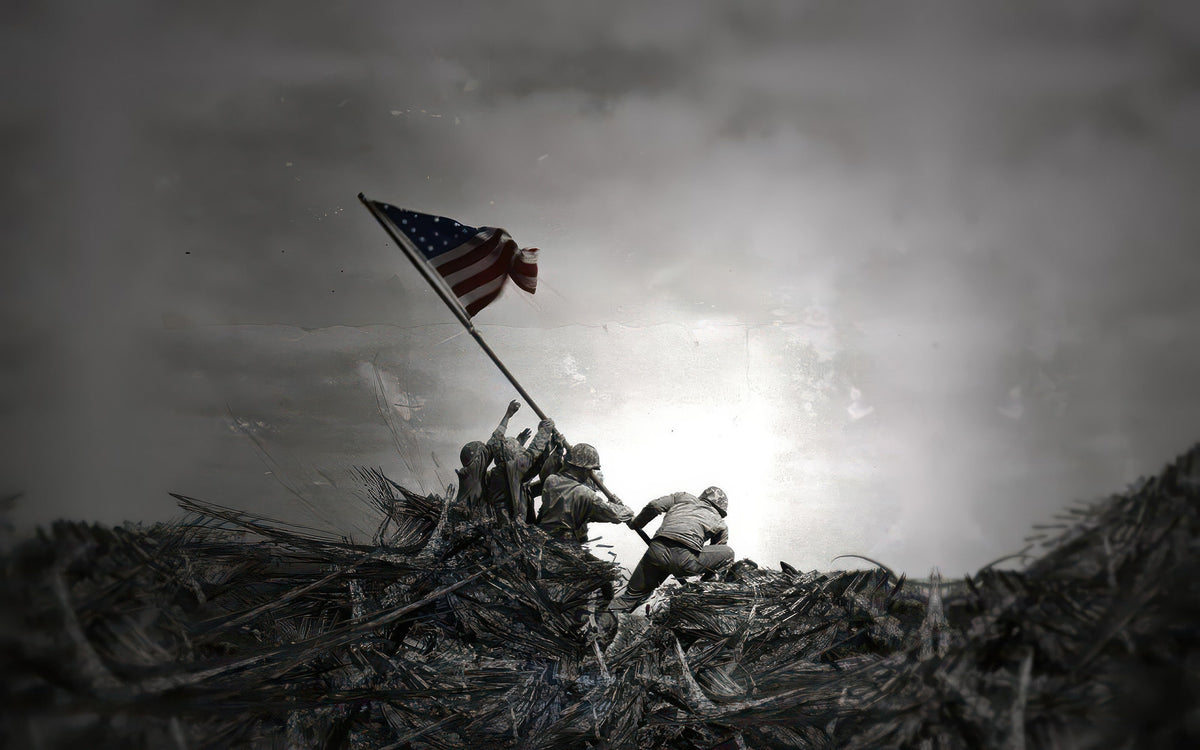
Flags of Our Fathers is a powerful and emotionally resonant nonfiction book by James Bradley, co-written with Ron Powers, that recounts the stories of the six U.S. Marines and Navy corpsman who raised the American flag atop Mount Suribachi during the Battle of Iwo Jima in World War II - a moment immortalized in one of the most iconic photographs in American history. More than just a history of a single battle, the book delves into the lives, motivations, traumas, and legacies of the men involved, particularly through the lens of James Bradley’s father, John “Doc” Bradley, one of the flag raisers.
The book is divided into three parts and combines rigorous historical research with deeply personal storytelling to trace the journey of the flag raisers from their humble upbringings through the hell of Iwo Jima and into the complicated aftermath of fame and postwar life.
Part One: "All American Boys" introduces the six men who became national heroes:
- John “Doc” Bradley – a Navy corpsman from Wisconsin and the author’s father.
- Franklin Sousley – a young Marine from Kentucky.
- Harlon Block – a Texan and former high school football star.
- Michael Strank – a Czech immigrant and sergeant from Pennsylvania.
- Rene Gagnon – a Marine from New Hampshire.
- Ira Hayes – a Native American Pima from Arizona.
Bradley details their diverse backgrounds, emphasizing that these were ordinary young men from small towns, who became involved in something far larger than themselves.
Part Two: "Flags of Our Fathers" is the heart of the book, focusing on the Battle of Iwo Jima - one of the bloodiest and most brutal campaigns of World War II. Bradley graphically describes the chaos, terror, and carnage of the fighting, highlighting the relentless combat and the incredible bravery and endurance of the U.S. forces.
The flag raising occurred on February 23, 1945, on the fifth day of the 36-day battle. There were actually two flag raisings: the first was less photographed, while the second - intended to replace the original flag with a larger, more visible one - was captured by Associated Press photographer Joe Rosenthal, resulting in the iconic image.
Unbeknownst to the men involved, the photograph would become a symbol of American valor and victory. However, three of the six flag raisers - Strank, Block, and Sousley - were killed in the subsequent fighting on Iwo Jima. The surviving three - Bradley, Hayes, and Gagnon - were brought back to the U.S. for a nationwide war bond tour, becoming unwilling celebrities.
Part Three: "A Bond Unlike Any Other", the book's final section, explores the impact of the photograph and the war on the survivors. Bradley examines how fame affected each man:
- John Bradley remained humble and deeply private about his experience, rarely speaking about Iwo Jima or the flag raising, even to his children.
- Ira Hayes struggled profoundly with survivor’s guilt, racial discrimination, and alcoholism, eventually dying young and tragically.
- Rene Gagnon tried to capitalize on his fame but ultimately led a relatively obscure life, frustrated by missed opportunities.
James Bradley investigates his father's reluctance to embrace the hero label, uncovering through letters, interviews, and military records the depth of trauma and the burden of memory that haunted the flag raisers. The book ends as a tribute not just to the six men, but to the thousands who fought and died in the Pacific theater.
BOOK NOTES:
- The book explores how a single photograph shaped a national narrative of heroism, often overlooking the complexity and cost behind the image. The mythic power of the flag raising contrasts with the brutal and chaotic reality of war.
- Bradley does not shy away from the horrors of Iwo Jima - describing it as a meat grinder of death and suffering. He emphasizes the trauma, both physical and psychological, that many veterans endured.
- The six men are portrayed not as superheroes, but as ordinary individuals who answered the call of duty. Their courage lay in doing their jobs despite fear, exhaustion, and the loss of friends.
- Particularly in the stories of Hayes and Gagnon, Bradley illustrates the difficulty of reconciling wartime experiences with peacetime life, and the burden of being cast as a symbol rather than a human being.
Bradley’s writing combines journalistic rigor with emotional depth. As the son of one of the flag raisers, his personal connection to the material lends the narrative a sense of authenticity and reverence. The book was widely acclaimed for humanizing history and became a New York Times bestseller. It was later adapted into a 2006 film directed by Clint Eastwood.
SUMMARY: Flags of Our Fathers is a profound, sobering, and deeply respectful tribute to the men who fought at Iwo Jima and to the reality behind one of the most enduring images in American history. James Bradley succeeds in peeling away the layers of myth to reveal the fragile, haunted, and heroic men beneath. The book is essential reading for anyone interested in World War II, military history, or the complex ways in which we remember and mythologize the past.
The Operator: Firing the Shots that Killed Osama Bin Laden and My Years as a SEAL Team Warrior
The Operator is the personal account of Robert O’Neill, a former U.S. Navy SEAL who took part in some of the most high-profile military operations of the 21st century - including the mission that killed Osama Bin Laden in 2011. The book traces O’Neill’s journey from small-town America to the ranks of SEAL Team Six, the elite counter-terrorism unit.
The memoir opens with O’Neill’s childhood in Butte, Montana, highlighting a typical American upbringing steeped in community, discipline, and hard work. He shares how a heartbreak and a desire to find purpose led him to enlist in the Navy, a decision that changed the trajectory of his life. He then takes readers through the grueling process of SEAL training - as BUD/S - and his eventual rise to one of the most elite fighting forces in the world.
Throughout the book, O’Neill recounts over 400 combat missions across Iraq and Afghanistan. These include the rescue of Captain Richard Phillips from Somali pirates (Operation Neptune Spear), the hunt for al-Qaeda leadership, and efforts to recover fallen comrades, such as during Operation Red Wings (the mission that inspired Lone Survivor).
The emotional centerpiece of the memoir is the detailed narrative of the Bin Laden raid in Abbottabad, Pakistan. O’Neill walks readers through the tense helicopter infiltration, the sweep of the compound, and the moment he claims to have fired the shots that ended the life of the terrorist mastermind responsible for the 9/11 attacks. The scene is delivered with high intensity, yet is also reflective and personal.
In the final chapters, O’Neill explores the aftermath of his military career, including the psychological toll, the controversy surrounding his public disclosure, and his efforts to transition into civilian life. He is honest about the cost of service - not only on his own mental health but also on his relationships and identity.
BOOK NOTES:
- O’Neill’s narrative is driven by a powerful sense of duty and fearlessness. His account sheds light on what it takes to be part of an elite unit and the inner strength required to survive and succeed in life-or-death situations.
- The camaraderie between SEALs is a recurring theme. O’Neill honors his teammates, especially those who never made it home, emphasizing the bond that transcends even the most dangerous missions.
- While O’Neill never questions the necessity of his missions, he acknowledges the emotional and ethical weight of killing, particularly in moments of quiet introspection.
- The most sobering sections are those that depict his return home. Struggling with PTSD and reintegration, O’Neill candidly discusses how the battlefield shaped - and scarred - him.
- The first-person narrative delivers a raw, unfiltered look at modern warfare.
- Whether it’s a raid, a gunfight, or a stealth infiltration, O’Neill’s descriptions are cinematic yet realistic.
- The memoir doesn’t shy away from vulnerability, especially in its final chapters.
SUMMARY: The Operator is a riveting and revealing memoir that offers a rare look inside the mind and life of a Navy SEAL. Whether recounting high-stakes operations or reflecting on the costs of service, Robert O’Neill delivers a compelling narrative that is both informative and emotionally resonant. It is not just a book about killing Osama Bin Laden - it is a book about what it takes to live a life of unwavering commitment in service of something greater than oneself.
Kabul: The Untold Story of Biden’s Fiasco and the American Warriors Who Fought to the End
Kabul: The Untold Story of Biden’s Fiasco and the American Warriors Who Fought to the End is a compelling investigative account that delves into the chaotic and deadly U.S. withdrawal from Afghanistan in August 2021. Written by investigative journalist Jerry Dunleavy and former Army captain and Afghanistan veteran James Hasson, the book offers a scathing critique of the Biden administration's handling of the withdrawal while honoring the courage and sacrifice of American service members who risked - and in some cases lost - their lives during the final days of the war.
The book opens with a stark reminder of the scenes from the Kabul airport - Afghans clinging to departing planes, the Taliban's rapid takeover of the country, and the terrorist attack at Abbey Gate that killed 13 American service members. From this foundation, Dunleavy and Hasson construct a narrative that seeks to both uncover the failures in U.S. leadership and spotlight the heroism of those who carried out the evacuation under near-impossible conditions.
A major focus of the book is the authors' argument that the Biden administration ignored intelligence, dismissed military advice, and underestimated the Taliban's capabilities. The authors lay out a timeline that suggests the White House was warned for months that the Afghan government was likely to fall quickly if the U.S. withdrew without a plan to maintain stability.
The book criticizes President Joe Biden and his top advisers for pressing forward with the withdrawal plan despite these warnings. It argues that their insistence on an arbitrary withdrawal deadline, paired with the decision to abandon Bagram Air Base, created logistical and security vulnerabilities that left Americans and Afghan allies exposed.
Interwoven with the political analysis are the stories of American military personnel, intelligence officers, and diplomats on the ground who scrambled to save lives. Dunleavy and Hasson highlight efforts by U.S. Marines and other military branches to evacuate over 120,000 people under fire and in extreme chaos.
The authors draw on firsthand interviews with service members and Gold Star families, especially in recounting the events surrounding the August 26 suicide bombing at Abbey Gate. They offer a detailed and emotional account of the attack and the aftermath, questioning whether it could have been prevented had security conditions been better managed.
A significant part of the book focuses on the plight of Afghan interpreters, soldiers, and civilians who had supported the U.S. war effort. Dunleavy and Hasson argue that the United States broke its promises to these individuals, leaving many behind to face Taliban reprisals. The authors are particularly critical of the bureaucratic red tape that slowed or halted Special Immigrant Visa (SIV) processing, even as the Taliban advanced.
Kabul concludes by calling for accountability at the highest levels of government, including Biden and his national security team. The authors contend that the withdrawal was not merely a tragic end to a long war, but an avoidable disaster caused by negligence and poor judgment. They also argue that the retreat damaged America’s global credibility and emboldened adversaries such as China, Russia, and Iran.
Dunleavy and Hasson bring a sharply critical tone to the Biden administration, and the book is undeniably partisan in its conclusions. However, the authors support their claims with detailed sourcing, interviews, and documentation. The book's most powerful sections are those that focus on the courage, pain, and moral clarity of the American warriors and diplomats who stood their ground as the world around them collapsed.
SUMMARY: Kabul: The Untold Story of Biden’s Fiasco and the American Warriors Who Fought to the End is both a blistering political indictment and a heartfelt tribute. It offers a necessary account of one of the most consequential foreign policy moments in recent U.S. history. For readers seeking to understand what happened during those final days in Afghanistan - and why - this book provides a detailed and impassioned perspective, balancing investigative journalism with powerful human stories.
Valley of the Shadow: An Account of American POWs of the Japanese
Valley of the Shadow: An Account of American POWs of the Japanese is a World War II memoir by Colonel Nicoll F. Galbraith, GSC, U.S. Army. He was General Jonathan M. Wainwright’s G-4, Logistics, staff officer, who survived the capture of Corregidor with Wainwright and other senior Allied officers, and endured three-and-a-half years as a Japanese POW (the same Prisoner of War camps as Generals Wainwright and Percival).
The Flags of My Father
It can often take a long time, often too long, for a son to recognize the value of his father, in his own life and that of the society he defended. The experience of my father, Col Nicoll F. “Nick” Galbraith, GSC, US Army, has come to me in magnificent proportion with the publication of Valley of the Shadow: An Account of American POWs of the Japanese.
This experience was triggered, now seemingly long ago, by the ambitious year-long exposition of our Pioneers Museum in Colorado Springs in 2010, titled "So Far From Home: The American POW Experience in World War II", the entire Japanese half of which was my father’s wartime archive, from the surrender of Corregidor in May of 1942 and continuing through the three-and-a-half years of infliction as a “guest of the emperor.”
As our Galbraith family amalgamated our father’s extensive POW archive, including Gen. Jonathan M. Wainwright’s original Corregidor surrender order, that aged, dusty box containing over 1,000 handwritten flimsies was dragged out from a deep family shelf, and I began to understand, page by page, what we had. The two flags played an integral part in the Corregidor surrender process and an emotional one in August 1945, when the POWs were rescued/released by a six man OSS team and the Russian Red Army, both events being very close calls.
Col. Galbraith treats these experiences thematically, in third-person narrative format, enabling him to offer a psychological, emotional, and moral matrix to help the reader interpret the challenges and personal behaviors of incarcerated American prisoners who suddenly had been deprived of their normal social and physical lives as officers, colleagues, husbands and fathers. Galbraith describes his own and his prison mates’ struggle to maintain their personal dignity and relationships.
- Whitney Galbraith, LCDR, US Naval Reserve, 1959-1964
Gallipoli
Peter FitzSimons’ Gallipoli is a meticulously researched account of one of the most significant and tragic campaigns of World War I: the Gallipoli Campaign. Fought between the Allied forces (mainly British, French, Australian, and New Zealand troops) and the Ottoman Empire in 1915, the campaign aimed to seize control of the Dardanelles Strait, a key route to Russia. What was meant to be a quick victory became a prolonged and disastrous battle that claimed thousands of lives on both sides.
The book offers a day-by-day narrative of the eight-month-long campaign, beginning with the strategic planning, which was deeply flawed from the outset. FitzSimons explains how British leadership, led by Winston Churchill (First Lord of the Admiralty), believed that capturing Gallipoli would knock the Ottoman Empire out of the war and open a new front against the Central Powers. However, the execution of the plan was marred by mismanagement, underestimation of the Turkish forces, and logistical failures.
FitzSimons does not focus solely on military tactics and politics. He brings to life the soldiers - especially the ANZAC (Australian and New Zealand Army Corps) troops - who landed on the beaches of Gallipoli on April 25, 1915. Their bravery and spirit, despite the horrors of war, form the emotional core of the narrative. FitzSimons pays tribute to the camaraderie, sacrifice, and endurance of these young men, many of whom were poorly prepared for the brutal conditions they encountered.
The Turkish side is also given significant attention, particularly the leadership of Mustafa Kemal (later known as Atatürk), who would go on to become the founding father of modern Turkey. Kemal’s tactical brilliance and the sheer determination of the Turkish forces played a crucial role in defending their homeland and ultimately forcing the Allies to withdraw in defeat. FitzSimons highlights how Kemal’s actions at Gallipoli cemented his legacy as a national hero.
Throughout the book, FitzSimons captures the devastating realities of trench warfare, the squalor, the constant shelling, and the psychological toll of the campaign on both sides. He weaves together personal anecdotes, letters from soldiers, and first-hand accounts to create an immersive and harrowing portrayal of life on the front lines. The battle scenes are vividly depicted, showing the chaos, fear, and confusion that dominated the battlefield.
The book also delves into the political and military aftermath of the campaign. The failure of Gallipoli had far-reaching consequences: it tarnished Churchill’s reputation, led to a re-evaluation of British military strategy, and galvanized the sense of national identity in Australia and New Zealand, where Gallipoli became a defining moment in their histories. FitzSimons emphasizes how the ANZAC legacy, borne out of this disastrous campaign, has come to symbolize courage and sacrifice for generations to come.
BOOK NOTES:
Gallipoli is an expansive and deeply engaging retelling of one of World War I’s most tragic and important battles. Known for his ability to bring history to life, FitzSimons manages to strike a balance between thorough historical analysis and the human stories behind the conflict. The book’s detailed narrative gives readers a clear understanding of the military strategies, while also focusing on the personal experiences of the soldiers involved, making it both informative and emotionally resonant.
- FitzSimons has done a remarkable job of sifting through historical records, personal letters, and accounts from soldiers on both sides to build a comprehensive and accurate picture of the campaign. His attention to detail is impressive, and he leaves no stone unturned in explaining the strategic missteps and the eventual failure of the campaign.
- While the broader scope of war is covered, Gallipoli excels in its portrayal of the individual soldiers who fought in the campaign. Their letters and diary entries add a layer of humanity to the horrors of trench warfare. This focus on personal stories makes the historical events more accessible and poignant.
- FitzSimons ensures that the book does not simply tell the story from the Allied perspective. He devotes significant space to the Turkish defense, particularly the leadership of Mustafa Kemal. This balance offers a fuller understanding of the battle’s dynamics and highlights the heroism on both sides of the conflict.
SUMMARY: Gallipoli is a powerful, sweeping historical narrative that masterfully captures the complexities and tragedies of the Gallipoli Campaign. His portrayal of the courage and endurance of the ANZAC forces, coupled with the fierce determination of the Turkish defenders, provides a balanced and deeply human account of the campaign. While the dense historical detail may be challenging for some readers, the emotional depth and the painstakingly researched storytelling make this book an essential read for those interested in World War I history, military campaigns, or the ANZAC legacy. In Gallipoli, FitzSimons succeeds in not only chronicling the events of the battle but also in honoring the memory of those who fought and died there, ensuring that their stories will continue to be remembered.
Echo Among Warriors: Close Combat in the Jungle of Vietnam (Fiction)
Author Dick Camp combines authentic characters, honest dialogue, and explosive action to create a vivid and harrowing account of combat, and a realistic narrative of what it was like to be a Marine in Vietnam.
Traversing three days of deadly encounters between Lima Company Marines and a North Vietnamese Army platoon holding a bunker complex near the Khe Sanh Combat Base - and seamlessly shifting between the perspective of U.S. troops and enemy fighters - Echo Among Warriors is an intense, brutal, poignant, and haunting ride.
The story's central theme is succinctly conveyed in the Author's Note: "War veterans know that words are insufficient to describe the destructive power of weaponry and the resulting, horrific wounds, the pain of a lost comrade, and the sudden realization that it could have been him. War causes a visceral, emotional impact on those who fight it. Combat is not for the faint of heart... and neither is this book!"
Commandos: Set Europe Ablaze (Fiction)
Commandos tells the story of two U.S. Marines (Captain Jim Cain and his Gunnery Sergeant Leland Montgomery) who are sent to fight alongside Britain's elite commando forces during World War II.
The story begins with a bang - literally - as the protagonist and his sidekick experience an air raid upon arriving in London on their way to the British Commando Basic Training Centre in the Scottish Highlands.
From there, the action and danger only escalates as Cain and Montgomery endure the grueling commandos training, and are ultimately sent on a daring secret mission (with the Captain leading the commandos) to a small Nazi-held island off the coast of France.
There's also a dash of romance, as Cain connects with the commanding officer's daughter Loreena (who has her own wartime assignments to carry out).
Written by a decorated Marine Corps combat veteran, Commandos drops the reader into an authentic military world of war and brotherhood.
Author Colonel Richard Camp (U.S.M.C. ret.) has penned numerous nonfiction military histories and biographies (including the exceptional The Devil Dogs at Belleau Wood and his more recent Shadow Warriors: The Untold Stories of American Special Operations During WWII), but Commandos is his first foray into fiction.
He does a worthy job; creating heroic and endearing characters, while setting up stakes that keep you turning the page.
Camp's vivid description brilliantly brings the prose to life, successfully transporting the reader to 1942. You can almost hear Vera Lynn singing "We'll Meet Again".
The author's laser-sharp pacing makes the action-packed story move quickly, and with its chapters constructed in short snippets, I can easily envision the book on the screen, as a movie or limited series.
Final Verdict: An exciting military/action genre read with nostalgic undertones.


![[SOLD OUT] Thomas Jefferson Quote: The Tree of Liberty Must Be Refreshed From Time to Time with the Blood of Patriots & Tyrants - Vintage Old West Art Print](http://www.rebelseedstudio.com/cdn/shop/files/Shop-Print-TreeOfLibertyQuoteVintage-PrintModel.jpg?v=1786494829&width=2000)
![[SOLD OUT] Thomas Jefferson Quote: The Tree of Liberty Must Be Refreshed From Time to Time with the Blood of Patriots & Tyrants - Vintage Old West Art Print](http://www.rebelseedstudio.com/cdn/shop/files/Shop-Print-TreeOfLibertyQuoteVintage-RusticWesternCredenza.jpg?v=1786494834&width=2000)